
Polls, Statistics, and Why You Shouldn’t Trust Everything You Hear
The hidden flaws in polls and how innumeracy leads to misinformation.
Every election season, the media is flooded with poll results predicting winners and losers. But how reliable are these polls? The answer depends on understanding the nuances of sampling, bias, and statistical uncertainty—areas where innumeracy often misleads the public.
One major issue is self-selection bias, where respondents volunteer instead of being randomly selected. This skews results because those with strong opinions are overrepresented. Another problem is nonresponse bias, where certain groups systematically avoid responding, further distorting the sample.
The margin of error is often misunderstood as a guarantee of accuracy, but it simply indicates a range within which the true population value likely lies. Smaller samples have larger margins, meaning less confidence in the results. Yet, headlines rarely provide this context, leading to overinterpretation.
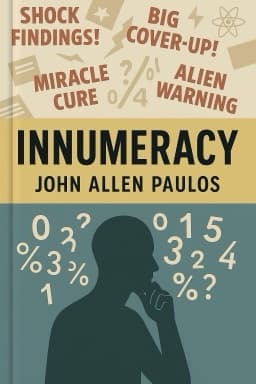
John Allen Paulos’ 'Innumeracy' emphasizes that polls are tools requiring critical interpretation. Understanding concepts like confidence intervals, sampling methods, and the impact of question phrasing can help readers discern which polls are trustworthy and which are not.
By improving statistical literacy, we equip ourselves to critically assess public opinion data, resist manipulation, and participate more effectively in democratic processes. In a world awash with data, numeracy is a shield against misinformation.
Stay informed, question the numbers, and never take a poll at face value.
References: Based on John Allen Paulos’ 'Innumeracy' and expert reviews from NewBookRecommendation.com, Sobrief.com, Bookey.app, and Complete-Review.com 1 2 3 4
Want to explore more insights from this book?
Read the full book summary