
The Hidden Math Behind Society’s Toughest Decisions: Voting, Cooperation, and Trade-Offs
How understanding math can help us navigate complex social choices.

Have you ever wondered why democratic voting sometimes leads to paradoxical results or why cooperation can be so hard to achieve even when it benefits everyone? These puzzles are rooted in mathematics and probability, yet innumeracy often obscures their understanding.
Condorcet’s paradox shows that even if individuals have consistent preferences, collective voting can cycle endlessly with no clear winner. This challenges the assumption that majority rule always leads to rational outcomes.
The prisoner's dilemma illustrates how rational self-interest can lead to worse outcomes for all parties involved. Despite the benefits of cooperation, incentives to defect create social dilemmas, from business competition to international relations.
Furthermore, statistical testing involves trade-offs between Type I and Type II errors, balancing the risks of false positives and negatives. These decisions have profound impacts on medicine, law, and policy.
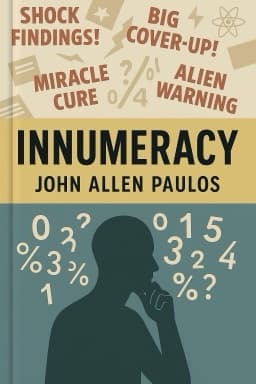
John Allen Paulos’ 'Innumeracy' highlights that understanding these mathematical foundations is crucial for navigating societal complexities. Innumeracy not only impairs personal decision-making but also undermines collective governance and social trust.
By embracing numeracy, we can better appreciate the intricacies of social trade-offs and contribute to more informed and equitable decisions.
References: Based on John Allen Paulos’ 'Innumeracy' and expert commentary from NewBookRecommendation.com, Sobrief.com, Bookey.app, and Complete-Review.com 1 2 3 4
Want to explore more insights from this book?
Read the full book summary