
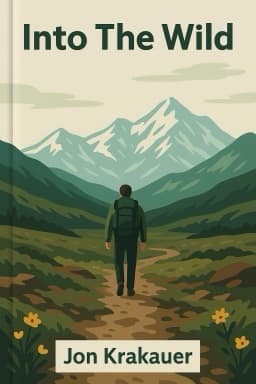
The Untamed Spirit: What Chris McCandless Really Taught Us About Freedom
Unpacking the life, ideals, and tragic journey of a young man who dared to live wild and free.

In the vast tapestry of modern American stories, few have captured the imagination and soul as profoundly as that of Chris McCandless. A young man who abandoned the trappings of conventional life to wander the wilderness, McCandless’s journey is one of daring idealism, philosophical questing, and ultimately, tragic consequence.
From the start, McCandless’s path was marked by a radical severance from societal norms. Burning cash, abandoning his car, and renouncing his given name, he sought a clean break — a rebirth into a life defined not by material wealth or family expectations, but by raw experience and self-reliance. This act of shedding was inspired by literary giants like Tolstoy and Thoreau, whose writings on asceticism, moral rigor, and the spiritual purity of nature resonated deeply with him.
Yet his idealism clashed with the harsh reality of the wilderness. The Alaskan bush, indifferent and unforgiving, tested his resolve and exposed the limits of youthful optimism. His minimal gear, lack of preparation, and underestimation of nature’s dangers led to a slow, heartbreaking decline culminating in starvation and death.
But beyond the tragedy, McCandless’s story is a beacon of inspiration. It reminds us of the power of human spirit to seek meaning beyond comfort, to challenge the status quo, and to embrace the unknown. His brief but meaningful human connections along the way — from desert campfires to fleeting friendships — reveal a complex social nature beneath his solitary exterior.
In the end, the legacy of Chris McCandless is a call to live authentically, to dare greatly, but also to prepare wisely. His life is a mirror reflecting our own desires for freedom, meaning, and connection, urging us to navigate these with both heart and humility.
Whether you see him as a reckless dreamer or a modern-day philosopher, his story remains a powerful narrative of the human condition, reminding us that the wild is not just a place on the map, but a state of being within us all.
Want to explore more insights from this book?
Read the full book summary