
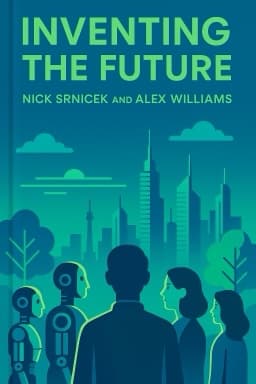
The Post-Work Revolution: How Automation and UBI Could Change Everything
Exploring the hopeful possibilities and challenges of a world beyond traditional work

The capitalist system has long promised progress through work, yet today it increasingly produces a surplus population excluded from stable employment. Automation, technological advances, and market dynamics have led to precarious labor conditions and widespread insecurity. This crisis challenges traditional notions of work, identity, and social inclusion.
Emerging technologies offer a way out of this crisis. Full automation could relieve humans from repetitive, dangerous, or tedious labor, enabling a society focused on creativity, leisure, and community. However, technological progress alone cannot guarantee emancipation; political and social frameworks must ensure that benefits are shared equitably.
Universal Basic Income (UBI) is one such framework. By providing a guaranteed income independent of employment, UBI decouples survival from work, expanding material freedom and autonomy. This synthetic freedom encompasses not only formal rights but the material conditions and social infrastructures that enable genuine human flourishing.
Transitioning to a post-work society requires cultural transformation. Work has historically been central to identity and social value. New social norms must celebrate diverse forms of contribution beyond wage labor, including caregiving, art, and collective care.
Political strategies must accompany these shifts, building broad coalitions, articulating clear demands, and creating democratic institutions to manage technological and social change. The left’s role is to lead this transformation, ensuring that technology serves emancipation rather than reinforcing inequality.
The post-work revolution is not a distant dream but an urgent necessity and a hopeful possibility, inviting us all to imagine and build a future where freedom is real and shared.
References: Srnicek & Williams, Inventing the Future; SoBrief summary; Orbistertiusnet insights
Want to explore more insights from this book?
Read the full book summary