
The Gender Data Gap: The Most Dangerous Bias You’ve Never Noticed
How ‘Neutral’ Data and Algorithms Are Failing Women—and What We Can Do About It

How ‘Neutral’ Data and Algorithms Are Failing Women—and What We Can Do About It
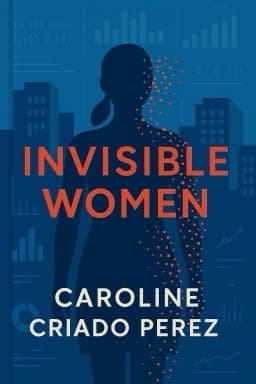
We live in a world obsessed with data. From health apps to traffic patterns, from hiring algorithms to government policy, data drives our decisions. But what if the data itself is flawed? Caroline Criado Perez’s ‘Invisible Women’ reveals a simple truth: when women are left out of data, they are left out of the world.
The gender data gap is everywhere. Algorithms trained on male-dominated datasets routinely favor men—whether it’s in job applications, credit scoring, or facial recognition. Public policy, too, often ignores women’s needs: urban planning focuses on direct commutes, ignoring the complex ‘trip-chaining’ journeys women make for caregiving and errands.
Why does this happen? For centuries, men have been treated as the default. Data is collected from men, products are tested on men, and policies are designed for male patterns of behavior. The result is a world where women’s experiences are invisible—and their needs unmet.
The consequences are profound. In medicine, this leads to misdiagnosis and inadequate treatment. In technology, it means products and services that don’t work for half the population. In public safety, it results in environments that are less safe for women.
The solution is clear: collect better data. Governments and companies are starting to require sex-disaggregated data, and activists are pushing for more inclusive research and design. It’s not just about fairness—it’s about building a world that works for everyone. ‘Invisible Women’ is a must-read for anyone who wants to understand the hidden biases shaping our lives—and how we can fix them. 1 2 4
Want to explore more insights from this book?
Read the full book summary