
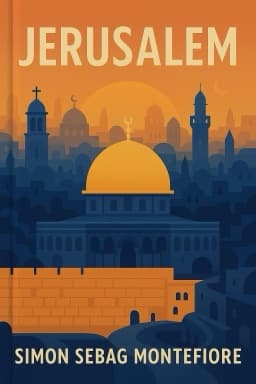
Why Jerusalem Is the Most Fought-Over City on Earth (And What That Means for Us)
Empires, Faiths, and the Battle for the World’s Most Sacred City

Empires, Faiths, and the Battle for the World’s Most Sacred City
Few cities can claim to have changed the course of history as often—or as dramatically—as Jerusalem. For thousands of years, its stones have witnessed the rise and fall of empires. The Romans rebuilt it in their own image, Herod the Great expanded its Temple into a wonder of the ancient world, and Byzantine emperors turned it into a Christian pilgrimage center. Islamic caliphs crowned it with the golden Dome of the Rock, a symbol of faith and unity that still dominates the skyline.
Yet every conqueror left behind more than monuments. They left stories—of faith, longing, and coexistence. After the First Crusade, European knights ruled Jerusalem for nearly two centuries, building churches and fortresses but also living alongside Muslims, Jews, and Eastern Christians in a city of uneasy peace. The city’s sacred sites have been reused, rebuilt, and reimagined by every faith, turning Jerusalem into a living museum of devotion and memory.
Even today, Jerusalem remains a magnet for pilgrims of all backgrounds. Its markets echo with the languages of the world, and its sacred stones draw millions each year. The city’s true power is not in its walls, but in its ability to inspire. In a world often divided by faith and politics, Jerusalem stands as a reminder that our deepest differences are often rooted in shared longing—and that the dream of peace is as old as the city itself.
Want to explore more insights from this book?
Read the full book summary