
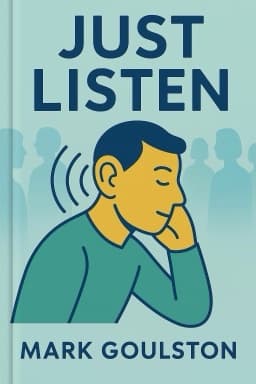
Unlock the Secret Weapon in Communication: Why 'Just Listen' Will Change Your Life
Discover how mastering the art of listening can transform your relationships and influence anyone, even the most difficult people.

Introduction: The Power of Listening
Imagine a tense standoff where a man holds a shotgun to his own head, surrounded by law enforcement and negotiators. It’s a life-or-death moment, yet the key to resolution isn’t force or logic—it’s the simple act of listening. This story encapsulates the essence of 'Just Listen': true listening can bridge the widest divides and transform resistance into cooperation.
The Neuroscience Behind Listening
Our brain is layered like an ancient city, with the reptilian brain focused on survival, the mammalian brain on emotion, and the primate brain on logic. When stress or fear takes over, the lower brain hijacks our responses, shutting down rational thinking. This is why people often react emotionally rather than logically in conflicts.
Mirror neurons play a crucial role—they fire both when we act and when we observe others, creating the biological basis for empathy. When you reflect someone’s feelings, you engage these neurons, making them feel 'felt' and understood. This connection is the foundation of trust and influence.
Mastering Your Emotional State
Before you can truly listen to others, you must master your own emotions. The 'Oh F#@& to OK' process teaches rapid emotional regulation: acknowledge your feelings, breathe deeply, recenter, refocus, and reengage calmly. This skill prevents amygdala hijacks and allows you to respond with poise, even under pressure.
For example, a leader who responds calmly in crisis inspires confidence and cooperation, whereas one who panics breeds chaos.
Breaking Down Mental Filters
We all carry mental filters shaped by past experiences and biases that distort what we hear. These filters cause misunderstandings and block genuine connection. 'Just Listen' teaches how to identify and suspend these filters, replacing snap judgments with open-ended questions and curiosity.
Even long-term relationships suffer from miscommunication due to these unseen barriers. Removing them can unlock deeper understanding and healing.
The Heart of Connection: Making Others Feel 'Felt'
At the core of effective communication is making others feel 'felt'—emotionally validated and accepted. This emotional validation lowers defenses and fosters trust. Difficult people often act out because they feel unheard or unimportant. By acknowledging their feelings sincerely, you can transform adversarial relationships into collaborative ones.
For instance, a manager who listens to complaints without judgment can turn a discontented employee into a motivated team member.
Being More Interested Than Interesting
One of the most powerful ways to connect is to be genuinely interested in others rather than trying to impress them. People crave being heard and understood. When you focus on their stories, fears, and dreams, you build rapport naturally.
Leaders who ask thoughtful questions and listen deeply inspire loyalty and trust far more than those who dominate conversations.
Making People Feel Valuable
Beyond listening lies the need to feel valuable. Recognizing and affirming others’ worth motivates positive behavior and cooperation. Neglecting this need breeds resentment and disengagement. Genuine appreciation strengthens relationships and enhances influence.
Imagine a team where every member feels their contribution matters—productivity and morale soar.
Navigating Conflict and Difficult People
Finally, 'Just Listen' equips you to handle dissonance—when self-perception clashes with others’ views—and difficult personalities. Strategies include seeking honest feedback, practicing humility, setting boundaries, and disengaging when necessary.
Understanding different types of difficult behaviors helps tailor your approach, preserving your well-being and influence.
Conclusion: The Journey to True Listening
This holistic approach—from brain science to emotional mastery, rewiring listening, building connection, and managing conflict—empowers you to reach anyone.
Want to explore more insights from this book?
Read the full book summary