
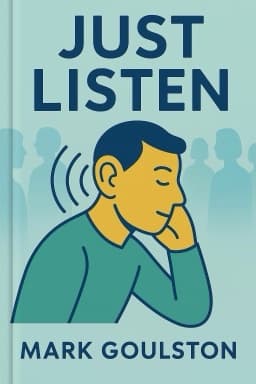
Why Most People Don’t Listen — And How 'Just Listen' Teaches You to Fix That
Explore the common barriers to listening and practical steps to overcome them with lessons from 'Just Listen.'

The Listening Gap: Hearing vs. Listening
Many people confuse hearing with listening. Hearing is passive; listening is active and requires focus, empathy, and openness.
Emotional Hijacking: When Feelings Block Communication
Stress triggers the amygdala to hijack rational thought, making people defensive or reactive. Without emotional regulation, conversations escalate instead of resolving.
Self-Focus: The Biggest Listening Killer
People often listen with the goal of responding or impressing rather than understanding. This self-focus shuts down genuine connection.
Practical Steps to Improve Listening
'Just Listen' offers tools like naming emotions, suspending judgments, asking open questions, and making others feel 'felt.' These techniques help dismantle barriers and foster authentic communication.
Conclusion
True listening is a learned skill that transforms relationships and influence. By understanding why people don’t listen and applying proven strategies, you can become the listener everyone trusts and respects.
Want to explore more insights from this book?
Read the full book summary