
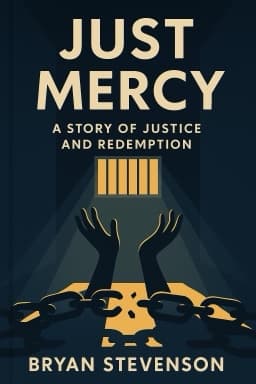
The Shocking Truth Behind America’s Death Row: What ‘Just Mercy’ Reveals About Justice
Dive deep into the harrowing realities of the American justice system as exposed by Bryan Stevenson’s powerful memoir.

Few books have shaken the conscience of America like Bryan Stevenson’s Just Mercy. This memoir is not just a recounting of legal battles but a profound exploration of humanity within a system designed for punishment. From the moment Stevenson visits a condemned man on death row alone, the reader is thrust into a world where justice and mercy collide in stark, often brutal contrast.
Stevenson’s narrative unveils the harsh realities faced by those on death row — cramped, windowless cells, extreme isolation, and unbearable heat. The psychological torment is compounded by the looming presence of execution devices, such as the infamous 'Yellow Mama' electric chair, casting a chilling shadow over daily life. Yet, amidst this despair, acts of resilience emerge: prisoners singing hymns, banging cups on cell doors in protest, and clinging to hope.
Beyond the physical conditions, the book exposes the racial biases deeply embedded in the justice system. All-white juries, exclusion of black jurors through peremptory strikes, and judicial overrides that impose death sentences despite jury recommendations reveal a system skewed by prejudice and political pressures. The legacy of Jim Crow laws and lynching as instruments of racial terror still echo in courtrooms today.
Stevenson’s work also highlights the devastating collateral consequences of incarceration — disenfranchisement, family disruption, and community destabilization — that extend far beyond prison walls. The plight of juveniles sentenced as adults, often to life without parole, underscores the system’s failure to recognize developmental science and the potential for rehabilitation.
Yet, Just Mercy is not a tale of hopelessness. It is a call to action, emphasizing the power of mercy, forgiveness, and relentless advocacy. Through DNA exonerations and legal victories, the book shows that transformation is possible. It challenges readers to confront their own complicity and to join the drumbeat for justice reform.
This book is essential reading for anyone seeking to understand the complex interplay of law, race, and morality in America’s justice system. It moves beyond statistics and legal jargon to reveal the human faces behind the headlines — faces that demand justice, mercy, and above all, recognition of their dignity.
For those ready to confront uncomfortable truths and be inspired toward change, Just Mercy offers a powerful guide and a beacon of hope.
Want to explore more insights from this book?
Read the full book summary