
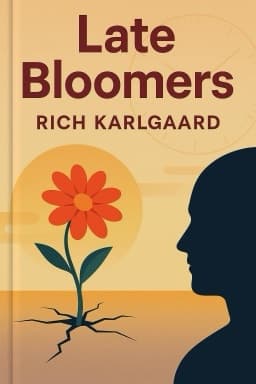
Why Being a Late Bloomer Is the Ultimate Success Hack You Didn’t Know About
Unlocking the hidden power of patience, persistence, and unique timing in human potential

In a world obsessed with early achievement and instant results, the idea of blooming late might seem like a setback. Yet, what if the true secret to lasting success and happiness lies precisely in embracing a slower, more deliberate path? This blog uncovers the science and stories behind late bloomers — individuals who defy society's rushed timelines and flourish in their own time, often with greater resilience, creativity, and fulfillment.
The Cultural Myth of Early Success
From prodigious child stars to young tech billionaires, society venerates early bloomers as the ultimate success models. Media spotlights youthful geniuses, fueling a narrative that if you haven’t 'made it' by your twenties, you might be left behind. This mindset has led to soaring rates of anxiety, depression, and burnout among young people striving to meet impossible expectations. But this fixation overlooks a fundamental truth:
Neuroscience Reveals the Brain’s Gentle Clock
Scientific research shows that the brain’s prefrontal cortex, responsible for planning, impulse control, and executive function, matures around the age of 25 — well beyond the teenage years often associated with adult responsibility. Moreover, different cognitive abilities peak at different life stages. While processing speed may peak early, vocabulary, emotional intelligence, and creativity often blossom in middle age or later. This means that intellectual and creative potential is not a sprint but a marathon,
The Hidden Strengths of Late Bloomers
Late bloomers often develop unique qualities such as heightened curiosity, compassion, resilience, and self-efficacy. These traits are cultivated through navigating challenges, self-doubt, and non-linear paths. For example, curiosity triggers dopamine release that benefits brain health and longevity, while compassion enhances leadership effectiveness and team cohesion. Importantly, late bloomers learn to transform self-doubt from a paralyzing force into a catalyst for insight and growth.
The Power of Changing Your Environment
Sometimes, growth requires repotting yourself — changing your social circles, workplace, or mindset. The 'crab pot syndrome' explains how groups may resist members’ advancement to maintain conformity. Finding environments aligned with your temperament and values fosters flourishing. Supportive peer networks provide accountability, encouragement, and safe spaces for experimentation and growth.
Knowing When to Persist and When to Quit
Persistence is vital, but so is the wisdom to quit unproductive paths. Blind persistence leads to burnout, while strategic quitting frees resources for more promising ventures. Late bloomers master this balance, using self-awareness to decide when to hold on and when to let go.
Patience and Narrative: Sustaining the Journey
Patience is active endurance, not passive waiting. Late bloomers develop grit that strengthens with age and experience. Personal narrative shapes motivation; reframing setbacks as learning opportunities builds resilience and a sense of agency. This mindset supports the long, sometimes winding path to success.
A New Vision for Human Potential
Late bloomers challenge the narrow definitions of success tied to youth. Recognizing diverse developmental timelines enriches society, fostering innovation, inclusivity, and mental well-being. Educational reform, workplace inclusivity, and cultural shifts toward patience and mental health awareness are key to honoring all paths.
Embrace your unique timeline. Your bloom is coming, and it will be magnificent.
References:
Psychology Today: Confessions of a Late Bloomer
1
Inside Personal Growth Podcast: Late Bloomers with Rich Karlgaard
2
Ana Brown Author: Late Bloomers and Therapy
3
Goodreads: Late Bloomers Book Overview
4
Want to explore more insights from this book?
Read the full book summary