
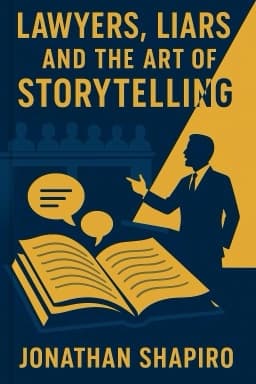
Unlock the Secret Weapon of Lawyers: How Storytelling Can Win Your Case
Discover how mastering storytelling transforms legal advocacy into a powerful tool for influence and justice.

Why Stories Matter More Than You Think
Imagine stepping into a courtroom where cold facts and dry legalese dominate. Now imagine instead a lawyer who tells a story — a story that breathes life into those facts, making them vivid, relatable, and compelling.
Long before laws were written, humans passed wisdom through stories. These oral traditions shaped societies and morals. Today, lawyers who master this ancient craft tap into a powerful means to persuade judges and juries alike. The book reveals that storytelling is a triad of ethos (credibility), logos (logic), and pathos (emotion). Balancing these elements turns legal arguments into narratives that resonate deeply.
The Pitfalls of Being a Miscast Storyteller
Not all lawyers succeed at storytelling. Many falter due to poor listening skills or lack of passion. One poignant example describes a lawyer who lost a critical meeting because of illness and nervousness, illustrating how delivery and connection matter as much as content. Similarly, TV law shows rely heavily on focus groups whose real-time feedback can make or break a series, underscoring the importance of audience engagement.
Mastering the Rhetorical Triangle
At the core of persuasion lies Aristotle's rhetorical triangle: ethos, logos, and pathos. Ethos builds trust through professionalism and integrity; logos provides the logical structure through facts and precedents; pathos connects emotionally with the audience's values and feelings. The book emphasizes that overreliance on any one element weakens the story. Instead, a balanced approach tailored to context is key.
For example, an attorney who combines a credible presence with clear reasoning and heartfelt appeals can move even skeptical jurors. The book’s insights include how appearance, ethical conduct, and expert endorsements enhance ethos; how common sense and clear evidence underpin logos; and how subtle emotional cues strengthen pathos without manipulation.
The Craft of Storytelling: Writing, Editing, and Rehearsing
Great stories are crafted through disciplined writing and ruthless editing. The book highlights that creative success depends as much on the eraser as the pen. Cutting unnecessary details sharpens the narrative and maintains audience focus. Rehearsal is equally important — practicing delivery builds confidence and allows storytellers to refine tone, pacing, and body language.
Feedback from trusted colleagues provides fresh perspectives, ensuring the story resonates as intended. The process transforms raw material into a polished, persuasive narrative ready for the courtroom or any stage.
Applying Storytelling in Real Legal Practice
Every legal case is rich with human conflict, motives, and resolution potential — fertile ground for storytelling. The book stresses that while narratives must be persuasive, they must also adhere to ethical boundaries. Deception undermines justice and professional reputation.
Emerging technologies such as digital presentations and social media expand storytelling possibilities, allowing lawyers to reach wider audiences. Adapting to these tools is essential for modern advocacy.
Conclusion
Want to explore more insights from this book?
Read the full book summary