
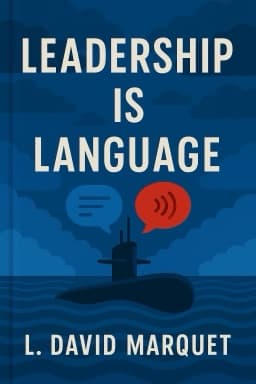
The Leadership Language Revolution: How Changing Your Words Can Save Lives and Boost Performance
Explore the revolutionary idea that leadership language can prevent disasters and drive extraordinary results

Leadership is not just about what you do but what you say. L. David Marquet’s Leadership Is Language argues that the language leaders use fundamentally shapes organizational culture, safety, and performance.
This juxtaposition illustrates how leadership language can either create chaos or foster collaboration and safety.
The El Faro tragedy serves as a sobering example of how rigid, coercive language and power gradients suppressed critical voices, leading to disaster. Conversely, language that invites collaboration, commitment, and connection builds resilient, adaptive organizations.
Research in psychology and neuroscience supports these insights. Language influences cognitive load, stress responses, and social dynamics. For instance, under pressure, leaders tend to obey the clock and rush decisions, activating reptilian brain functions that impair complex thinking.
Changing leadership language involves shifting from command-and-control to a new playbook involving six key plays: controlling the clock, collaborating, committing, completing, improving, and connecting. Each play addresses a critical aspect of leadership communication that fosters psychological safety and team intelligence.
Practical tools include using open-ended questions, anonymous voting, action-based commitments, chunking work, embracing vulnerability, and flattening power gradients. These strategies empower teams, reduce errors, and drive innovation.
This image captures the essence of connection as the foundation of effective leadership.
By embracing this language revolution, leaders can transform their organizations, prevent failures, and unlock extraordinary performance. For more detailed analysis and summaries, visit The Leadership Sphere and 5MinuteBookSummary. 4 3
Want to explore more insights from this book?
Read the full book summary