
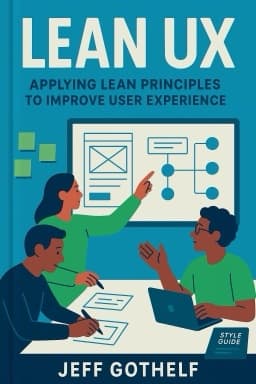
Unlock the Secrets of Lean UX: How to Revolutionize Your Product Design Today!
Discover the transformative power of Lean UX and why it’s the future of user-centered product design.

In today's fast-evolving digital landscape, traditional user experience design methods often fall short. The lengthy documentation, isolated design phases, and slow feedback cycles leave teams struggling to keep pace with customer needs and market changes. Enter Lean UX — a revolutionary approach that transforms how products are designed and delivered by emphasizing collaboration, rapid experimentation, and continuous learning.
What is Lean UX? At its core, Lean UX is a mindset and process that blends the best of Design Thinking, Agile development, and Lean Startup philosophies. It moves away from heavy upfront specifications and instead encourages teams to frame their work as hypotheses — assumptions to be tested and validated with real users.
This approach empowers small, cross-functional teams to work closely together, breaking down silos between designers, developers, product managers, and researchers. By collaborating continuously, these teams build shared understanding and make faster, more informed decisions.
One of the key tools in Lean UX is the Minimum Viable Product (MVP). MVPs are the smallest possible versions of a product or feature that allow teams to test assumptions quickly and economically. These can range from simple landing pages or email campaigns to clickable prototypes or even manual 'concierge' services that simulate automation behind the scenes. The goal is to learn rapidly what works and what doesn’t, minimizing waste and maximizing value.
Continuous user feedback is the heartbeat of Lean UX. Practices like 'three users every Thursday' — regularly testing with small groups — keep the team connected to real user needs and experiences. Importantly, this feedback loop includes the entire team, fostering empathy and shared commitment.
Integrating Lean UX into Agile workflows further accelerates innovation. Rather than treating design and development as separate phases, Lean UX weaves design activities directly into sprint rhythms, ensuring design and user validation happen in parallel with coding and testing.
However, adopting Lean UX requires more than new processes; it demands organizational shifts. Cross-functional teams replace departmental silos, designers evolve from isolated experts to facilitators of collaboration, and cultures embrace experimentation with permission to fail safely.
Ultimately, Lean UX is about creating products that truly resonate with users by fostering a culture of continuous learning, collaboration, and outcome-focused progress. Whether you’re just starting or looking to deepen your practice, embracing Lean UX can transform your team’s ability to innovate and deliver value in today’s fast-paced world.
Ready to dive deeper? In the following blogs, we’ll explore the foundational pillars of Lean UX, principles that guide teams to success, practical processes for collaborative design, and how to integrate Lean UX seamlessly into Agile development.
Want to explore more insights from this book?
Read the full book summary