
How Modern Economics Became Our New Religion (And Why That Matters)
Unpacking the Hidden Beliefs That Shape Our Daily Choices and Society

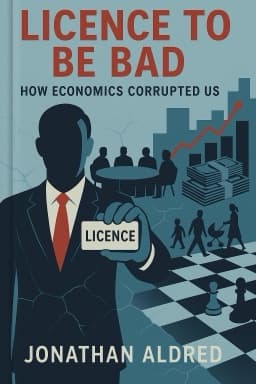
Imagine waking up in a world where every decision—from what you buy for breakfast to how you vote—is quietly shaped by a set of invisible beliefs. These aren’t the commandments of old religions, but the subtle, pervasive logic of modern economics. In Jonathan Aldred’s eye-opening book, 'Licence to be Bad', he argues that economics has not just become a tool for understanding markets, but a full-blown moral system, filling the void left by declining religious authority.
Just as religions once dictated what was right and wrong, economic reasoning now whispers in our ears: 'Act in your own interest, trust only when it pays, and remember—efficiency is the highest virtue.' This shift didn’t happen overnight. It was the result of decades of intellectual evolution, starting with the Mont Pèlerin Society’s postwar project to make market logic seem like common sense. Their success is everywhere: we talk about 'market solutions' for everything from climate change to education, and we excuse selfishness as simply 'rational behavior.'
The rise of 'homo economicus'—the perfectly rational, self-interested actor—has changed how we see ourselves. Where once we prized virtue, duty, and community, now we are told to maximize utility. Trust has become a calculation, not a virtue; justice is often reduced to efficiency. The famous Prisoner’s Dilemma, born in the Cold War’s shadow, taught us to expect betrayal, not cooperation. Even our governments are seen through this lens: public choice theory reduces democracy to a marketplace of self-serving actors, and Arrow’s Impossibility Theorem fuels cynicism about collective action.
But this way of thinking comes at a cost. When markets expand into every realm—education, health, even the environment—non-market values like fairness, dignity, and community are crowded out. We risk becoming the very robots our models describe, losing touch with the messy, beautiful reality of human connection. Yet, resistance is growing. Across the world, new movements are reclaiming the language of justice, trust, and the common good. They remind us that the stories we tell shape the world we build.
This blog will guide you through how economics became our new faith, why it matters, and how we can begin to write a new story—one that puts humanity back at the center of our shared life.
For more on the rise of economic narratives and their impact, see recent essays on the power of framing and the importance of reclaiming public debate.
1
4
Want to explore more insights from this book?
Read the full book summary