
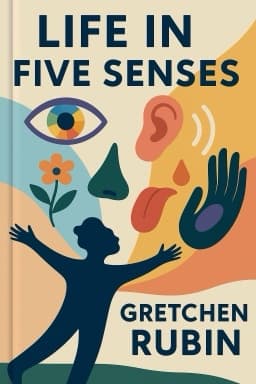
Why You’re Missing Out on Life: The Science Behind Sensory Awareness
Explore the fascinating neuroscience of how your senses shape reality and why mindful attention matters more than you think.

Our senses are often taken for granted, yet they are the foundation of how we experience reality. Neuroscience reveals that sensory perception is not a passive process but an active construction by the brain. For example, our sharp visual focus is limited to a tiny area, and the rest of the scene is filled in by the brain to create a seamless picture. This explains why we can be blind to obvious things when our attention is elsewhere—a phenomenon known as inattentional blindness.
Sound perception is equally complex. Our hearing range spans from 20 Hz to 20,000 Hz, but sensitivity diminishes with age. Noise pollution, a modern health hazard, elevates stress hormones, disrupts sleep, and contributes to heart disease. Conversely, music and mindful listening can lower heart rate and promote relaxation.
Smell connects directly to the limbic system, the brain’s center for emotion and memory, explaining why scents evoke powerful recollections. Cultural differences shape how smells are perceived and valued, adding a rich layer of diversity to sensory experience.
Taste is a multisensory experience involving five basic tastes and retronasal olfaction, which explains why food tastes bland with a blocked nose. Mindful tasting and sensory training can enhance flavor appreciation and social bonding.
Touch is fundamental for emotional bonding, releasing oxytocin and reducing stress. The hands, with dense nerve endings, are vital for sensory exploration and creativity.
Incorporate sensory mindfulness practices into your daily routine to harness these benefits and unlock a fuller, richer life experience. Explore resources such as 'Coming to Our Senses' for deeper insights. 1 2 4
Want to explore more insights from this book?
Read the full book summary