
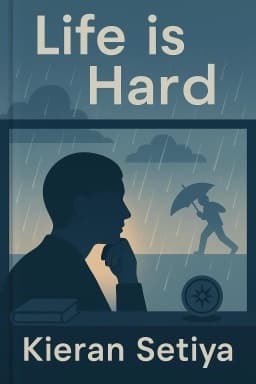
From Failure to Flourishing: How Embracing Imperfection Leads to a Richer Life
Why redefining failure and valuing process over perfection can unlock your true potential.

Failure is a universal experience that often carries heavy social stigma. Yet, when examined through a philosophical lens, failure reveals itself not as a mark of shame but as an integral part of growth and flourishing. Understanding failure’s cultural construction and its relationship to our life narratives can profoundly change how we live and strive.
Historically, the concept of failure as a social identity emerged alongside capitalist values that link human worth to productivity and creditworthiness. This perspective can trap us in harsh judgments about our worth based on success or failure. However, distinguishing between telic activities—those with fixed endpoints—and atelic activities—ongoing engagements without clear completion—helps us appreciate the value of process and presence. Relationships, contemplation, and creative pursuits are examples of atelic activities that provide continuous meaning regardless of 'success' or 'failure.'
Narrative unity—the tendency to view life as a single, coherent story of success or failure—can exacerbate feelings of inadequacy. Embracing a fragmented, digressive narrative allows us to see life as a mosaic of experiences, where failure is just one thread among many. This view fosters resilience and self-compassion, encouraging us to continue striving despite setbacks.
Real-life examples from sports and everyday life illustrate that failure is not an endpoint but a moment within a larger journey. These stories teach us that embracing imperfection and valuing ongoing effort enrich our lives far more than chasing unattainable perfection.
By redefining failure in this way, we open the door to flourishing—a life characterized by growth, meaning, and grace. Philosophy thus offers practical tools to transform how we face setbacks, inviting us to live fully and courageously in the face of life’s inevitable challenges.
Sources: Life Is Hard by Kieran Setiya, Philosophy A Way of Life blog, Goodreads reader reflections.
Want to explore more insights from this book?
Read the full book summary