
Unlock the Hidden Power of Listening: Why Most People Get It Wrong
Discover how mastering empathy, curiosity, and humility can transform your conversations and relationships forever.

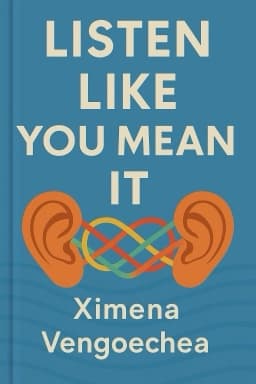
Listening is one of those deceptively simple acts that we all perform daily, yet few truly master. The difference between hearing and listening can mean the gap between isolation and connection, misunderstanding and clarity, conflict and harmony. In 'Listen Like You Mean It,' Ximena Vengoechea invites us to revisit what it means to listen with intention and heart.
Empathy asks us to step into another’s shoes, to feel their emotions not as problems to solve but as experiences to honor. Neuroscientific research reveals that engaging empathetically activates brain regions linked to emotional processing, enhancing connection and understanding. Imagine a friend sharing their anxiety about a new job. Instead of offering quick fixes, empathetic listening lets you absorb their vulnerability, creating a safe space for honest sharing.
Humility complements empathy by encouraging us to release the urge to control or judge. It’s the quiet acknowledgment that we don’t have all the answers and that listening itself is a form of learning. This openness disarms defensiveness and invites authenticity, transforming conversations into mutual explorations rather than debates.
Curiosity fuels the desire to discover more, even when topics seem mundane or difficult. Asking open-ended questions like 'What was that like?' or 'How did you feel?' invites others to unfold their stories fully. Curiosity also signals value and respect, making people feel seen and appreciated.
But how do we stay present in a world filled with distractions? Vengoechea highlights the importance of self-awareness—recognizing when our minds wander or fatigue creeps in—and trusting ourselves to remember the emotional gist rather than every detail. Patience, especially with silence, allows conversations to breathe and deepen. For example, allowing a friend to pause before responding can open space for vulnerability rather than rushing to fill the void.
Reading beyond words is another crucial skill. Body language, voice tone, and word choice often reveal more than the spoken message. Feet pointed away might betray disengagement despite smiling faces; mirroring body language builds rapport subconsciously. Paying attention to these cues enriches our understanding and guides compassionate responses.
Adapting our listening role is vital. We all have default modes—problem-solvers, validators, empaths—but the magic happens when we flex to meet others’ needs. Sometimes that means offering advice, other times simply holding space without judgment. Recognizing hidden needs behind apologies or minimizing language helps us respond with grace and depth.
Deepening connection with thoughtful, open-ended questions encourages storytelling and honesty. Phrases like 'Tell me more' or 'What do you think caused that?' invite reflection and intimacy. Showing genuine curiosity is often more important than being interesting yourself.
Flexibility in conversation—loosening scripts, embracing silence, and building on ideas—turns communication into a collaborative dance. This openness fosters authenticity and invites unexpected insights.
Finally, closing the loop by confirming understanding and caring for ourselves ensures sustainable connection. Summarizing what we hear reduces miscommunication, while recognizing listener fatigue helps maintain emotional energy.
Mastering these skills not only transforms how we listen but also how we relate to the world and ourselves. As one reviewer notes, this book is a 'fabulous guide' to reclaiming the lost art of true connection in an age of distraction.
Are you ready to listen like you mean it?
Want to explore more insights from this book?
Read the full book summary