
Why Your Conversations Fall Flat and How to Fix Them With Empathy
Transform awkward or shallow talks into meaningful dialogues by mastering empathy and curiosity.

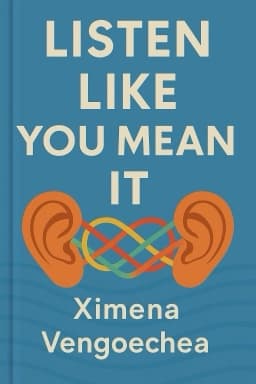
Have you ever left a conversation feeling unheard or disconnected? These moments are all too common in our fast-paced lives, where multitasking and distractions steal our attention. Yet, beneath the surface, the solution lies in a simple but profound shift: listening with empathy. Ximena Vengoechea’s 'Listen Like You Mean It' reveals that empathy, humility, and curiosity are the pillars that hold up meaningful conversations.
Curiosity is the spark that keeps conversations alive. Asking questions like 'What was that like for you?' or 'How did you come to feel that way?' encourages others to open up. Research shows that people are naturally drawn to those who show genuine interest, building stronger bonds.
Staying present amid distractions is challenging but essential. Techniques such as self-awareness—recognizing when your mind drifts—and trusting your memory to hold the emotional gist help maintain focus. Patience with silence allows thoughts and feelings to surface naturally, enriching dialogue.
Nonverbal cues provide a roadmap to true feelings. Feet pointed away may signal a desire to disengage, while mirroring body language fosters connection. Listening beyond words helps avoid misunderstandings and respond with compassion.
Adapting your listening style to the situation is crucial. Are you defaulting to problem-solving when empathy is needed? Learning to flex between roles improves communication and reduces friction.
Finally, confirming understanding by summarizing and clarifying ensures alignment and builds trust. Recognizing listener fatigue and practicing self-care maintains your capacity for deep engagement.
By embracing these principles, you can transform awkward or shallow conversations into rich, meaningful exchanges that nurture your relationships and personal growth.
Are you ready to fix your conversations and truly connect?
Want to explore more insights from this book?
Read the full book summary