
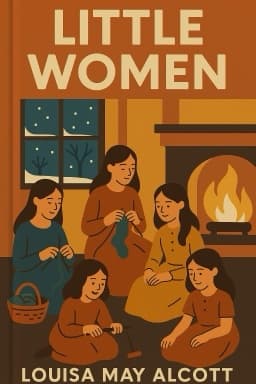
The Untold Depths of Little Women: Beyond the Surface of a Beloved Classic
Exploring the feminist and social critiques hidden within Louisa May Alcott’s iconic novel.

At first glance, Little Women appears as a tender story of family life and growing pains, but beneath its warm narrative lies a sharp critique of 19th-century gender roles and social expectations. Louisa May Alcott crafts characters who embody diverse responses to the constraints placed on women, making the novel a landmark in feminist literature.
Jo March, the tomboyish and ambitious sister, resists the era’s prescribed feminine ideals. Her desire to write and live independently challenges the cult of domesticity that defined womanhood as centered on home and marriage. Yet, her eventual marriage to a scholarly professor complicates this rebellion, raising questions about the compromises women make between personal freedom and societal acceptance.
Amy’s journey from vanity to artistic maturity highlights another facet of female empowerment — the pursuit of creative expression and social mobility. Her travels to Europe and refined ambitions reflect the growing opportunities and limitations for women in art and society.
Meanwhile, Beth’s quiet selflessness and Meg’s embrace of domesticity offer models of virtue and responsibility, showing that empowerment can take many forms. The sisters’ different paths illustrate the complexity of womanhood beyond simplistic binaries.
The novel’s moral framework, inspired by the allegory of Pilgrim’s Progress, provides a spiritual dimension to the sisters’ struggles. Carrying burdens and seeking the 'Celestial City' symbolize their moral and personal growth, intertwining religious ideals with feminist themes.
Critical perspectives reveal how Little Women subtly critiques the limitations imposed on women while affirming the value of family and personal integrity. It stands as a pioneering text that speaks to both its time and ours, inviting readers to reconsider notions of virtue, ambition, and identity.
Sources: Salem Press critical insights, America Magazine feminist discussion, SparkNotes 2 , 4 , 1
Want to explore more insights from this book?
Read the full book summary