
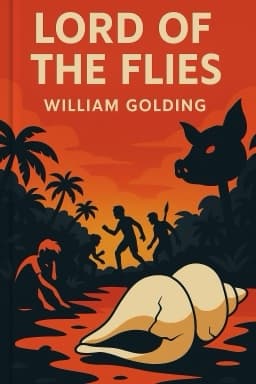
Unmasking the Darkness: What 'Lord of the Flies' Reveals About Human Nature
Dive deep into the haunting truths about civilization and savagery hidden in Golding’s classic novel.

William Golding’s Lord of the Flies is not merely a tale of boys stranded on an island; it is a chilling exploration of the duality within every human being—the thin line between civilization and savagery. From the moment the boys discover the conch shell, a symbol of order and authority, the novel sets the stage for a profound examination of society’s fragile constructs.
As the story unfolds, the island transforms from a paradise into a microcosm of the human psyche. The fear of the unknown manifests as the 'beast,' an entity that is less a creature and more a reflection of the boys’ inner darkness. This symbolizes a universal truth: often, the most terrifying monsters are those within ourselves. The littluns’ nightmares and escalating hysteria demonstrate how fear can spread and fracture communities, leading to paranoia and violence.
The painted masks the boys adopt serve as a psychological shield, liberating them from the constraints of their former civilized selves. This anonymity allows them to act on primal impulses, showing how identity and social norms regulate behavior. The masks become totems of power and tribal identity, reinforcing divisions and accelerating the descent into savagery.
The novel’s climax, marked by the destruction of the signal fire and the shattered conch, poignantly symbolizes the collapse of hope and order. These tragic events underscore the devastating consequences when fear and power struggles override reason and morality. The final arrival of the naval officer brings a sobering contrast between the innocence lost on the island and the world of adult civilization, forcing both the characters and readers to reflect on the darkness inherent in humanity.
Psychologically, Golding’s work resonates with theories about the human capacity for evil and the thin social veneer that keeps it in check. It challenges readers to confront uncomfortable questions about what lies beneath the surface of society and themselves.
In essence, Lord of the Flies is a mirror reflecting the complexities of human nature, inviting us to look beyond the story of stranded boys to the universal truths it reveals. Its lessons remain crucial in understanding the dynamics of fear, leadership, and morality in any society.
Continue reading to explore how leadership struggles and the burden of responsibility shape the boys’ fate.
References: SparkNotes, CollegeTransitions, CliffsNotes 1 2 4
Want to explore more insights from this book?
Read the full book summary