
The Surprising Science Behind Why Love and Respect Transform Marriages (And What Most Couples Get Wrong!)
Unlocking the Hidden Dynamics That Make or Break Intimate Relationships

Unlocking the Hidden Dynamics That Make or Break Intimate Relationships
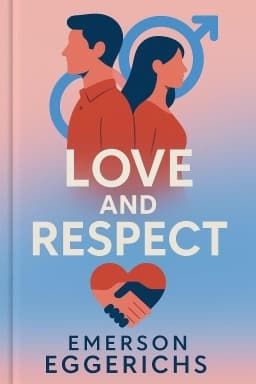
Imagine waking up tomorrow to a marriage that feels lighter, warmer, and more connected—even if nothing about your partner has changed yet. That’s the promise at the heart of Emerson Eggerichs’ 'Love and Respect,' a book that has quietly revolutionized how millions of couples see each other, communicate, and heal. But why does this message resonate so deeply? And what’s the science (and soul) behind it?
At its core, 'Love and Respect' is built on a simple but profound insight: wives most need love, and husbands most need respect. This isn’t just a biblical command from Ephesians 5:33—it’s a truth backed by decades of psychological research. Studies show that men and women process emotional pain differently. When men feel disrespected, their bodies react with stress responses similar to physical pain; for women, a lack of love triggers similar alarms. The book’s genius is in connecting these dots and offering a practical roadmap out of the endless loop of hurt and misunderstanding.
Most couples, Eggerichs explains, get trapped in what he calls the 'Crazy Cycle.' She feels unloved, so she reacts with disrespect (often unintentionally). He feels disrespected, so he withdraws love. Round and round they go, each waiting for the other to change first. The result? Years of the same argument, played out over dishes, money, intimacy, or parenting. But here’s the kicker: the cycle can be broken by just one partner choosing to give what the other needs most—unconditionally.
The science behind this is fascinating. Neurobiologists have found that when men feel respected, their brains release oxytocin—the same 'bonding hormone' that fosters connection. For women, feeling cherished and loved triggers the same effect. This isn’t about stereotypes; it’s about how our brains and hearts are wired. And it’s why trying to 'fix' your partner rarely works, but changing your own response can shift the entire dynamic.
Real-life stories from the book—and echoed in countless online testimonials—reveal how small acts can spark big change. One husband, after years of feeling nagged, was stunned when his wife simply thanked him for his hard work. He started coming home earlier, talking more, and even planning dates. Another wife, after feeling invisible, was moved to tears when her husband left her a note saying he loved her 'just because.' These aren’t fairy tales; they’re the result of understanding and meeting each other’s core needs.
So, what can you do today? Start with these steps:
- Ask, don’t assume. When conflict arises, pause and ask your partner: 'Do you feel unloved/disrespected right now?' This defuses tension and opens a path to empathy.
- Give unconditionally. Don’t wait for your partner to 'deserve' love or respect. Offer it as a gift, not a reward.
- Practice daily rituals. Small gestures—a note, a compliment, a gentle touch—build trust over time.
The genius of 'Love and Respect' is that it doesn’t promise perfection. It promises progress. The real miracle is not in never fighting, but in learning to fight for each other, not against each other. And as countless couples have discovered, the choice to give love or respect—especially when it’s hardest—can spark a new cycle of hope.
Whether you’re newlyweds or decades in, the science and stories behind 'Love and Respect' offer a roadmap to a relationship that’s not just stable, but joyful. The journey starts with a single step: seeing your partner not as the enemy, but as someone whose needs are as real—and as worthy—as your own.
Want to explore more insights from this book?
Read the full book summary