
The Hidden Psychology Behind 'Magic Words' That Make You Unstoppable
Explore the surprising psychological mechanisms that make certain words irresistible and influential.

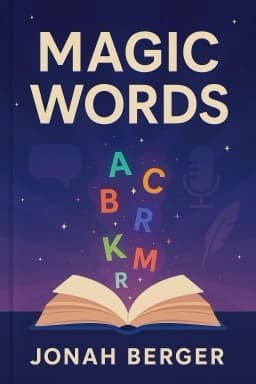
Language is not just about exchanging information; it’s about shaping minds and behaviors. Jonah Berger’s 'Magic Words' reveals the deep psychology behind why certain words carry extraordinary power.
At the heart of this power is identity activation. When we describe actions as identities, we tap into a stable self-concept that guides behavior. This explains why children who are called 'helpers' are more likely to clean up than those simply asked to help. The brain craves consistency between identity and action, making identity-based language a potent motivator.
Confidence in language triggers social cues that signal competence and authority. Removing hedges and using present tense verbs activates neural pathways associated with certainty and trust. These subtle cues influence how others perceive expertise and credibility, often unconsciously.
Questions serve dual psychological functions: they gather information and build social bonds. Asking for advice flatters the advisor’s ego and signals humility, which paradoxically increases perceived intelligence. Follow-up questions demonstrate active listening, a key component of empathy and relationship building.
Concrete language reduces cognitive load by providing vivid mental images, making messages easier to process and remember. Abstract language, meanwhile, activates higher-order thinking associated with vision and creativity.
Emotion plays a crucial role in engagement. The 'pratfall effect' shows that admitting flaws makes competent individuals more relatable. Emotional ups and downs in stories prevent habituation, sustaining attention and enhancing memory encoding.
Finally, language reflects and reveals hidden biases and social dynamics. Forensic linguistics can identify authorship and predict behavior, while subtle variations in speech reveal implicit prejudices, impacting social trust.
Sources: Insights from Jonah Berger’s 'Magic Words,' cognitive psychology, and social neuroscience. For further reading, see Stanford GSB Insights and The Roundtable Review. 1 2
Want to explore more insights from this book?
Read the full book summary