
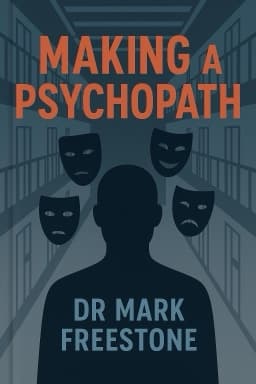
Inside the Mind of a Psychopath: Shocking Truths You Never Knew
Unmasking the many faces of psychopathy and the chilling realities behind the mask

When we hear the word 'psychopath,' many envision a cold-blooded killer, a figure cloaked in darkness and devoid of empathy. But the truth is far more intricate and unsettling. Psychopathy is not a one-size-fits-all label; it is a sprawling spectrum of traits and behaviors that manifest differently in every individual. Imagine a puzzle with over 15,000 pieces, each representing a unique combination of personality features. This is the reality illuminated by the Psychopathy Checklist-Revised (PCL-R), a diagnostic tool that reveals the staggering diversity within this diagnosis.
Neurologically, the story unfolds in the prefrontal cortex and amygdala—brain regions responsible for decision-making, impulse control, and emotional processing. Differences in these areas explain why many psychopaths lack empathy and remorse. Yet, these brain differences do not predestine an individual to violence or crime; instead, they shape a complex interplay of traits that may lead to vastly different life paths.
Consider the man who rules a prison wing not through brute strength, but through manipulation and social control. His charm and keen understanding of human nature allow him to dominate inmates and even compromise staff integrity. This form of power is subtle yet pervasive, a psychological game played within the harsh confines of incarceration.
Contrast this with the charismatic conman who uses pathological lying as his weapon. His neurological wiring enables him to fabricate elaborate falsehoods without shame, weaving stories so seamlessly that even those closest to him struggle to discern truth. His crimes, though non-violent in nature, leave a trail of emotional and financial devastation.
Yet, psychopathy is not confined to violence or deception alone. Some individuals live parasitic lives, exploiting others emotionally and financially, their dependency masked by quiet desperation. Others wrestle with overlapping conditions like high-functioning autism, complicating diagnosis and treatment.
Understanding psychopathy requires peeling back layers of myth and stereotype. It demands recognizing the humanity behind the diagnosis—the fears, struggles, and sometimes the capacity for change. As we journey through these stories, we learn that psychopathy is not a villain’s mask but a complex mosaic shaped by biology, environment, and experience.
By embracing this complexity, society can better manage risks, support rehabilitation, and foster hope where despair once reigned.
For further reading, explore works such as 'Without Conscience' by Robert Hare, which provides a seminal look into psychopathic traits, or 'The Wisdom of Psychopaths,' offering insights into how some with these traits succeed in society. These perspectives enrich our understanding and challenge us to look beyond fear and sensationalism.
4 3
Want to explore more insights from this book?
Read the full book summary