
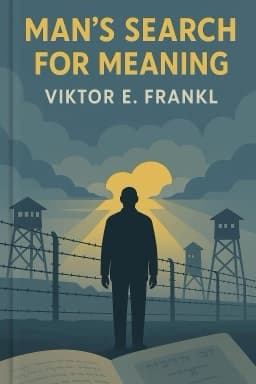
From Holocaust Horror to Healing Hope: The Transformative Power of Tragic Optimism
How embracing life’s darkest moments can lead to profound personal transformation and resilience.

Among the many profound insights Viktor Frankl offers in Man’s Search for Meaning, his concept of tragic optimism stands out as a beacon of hope amid despair. Tragic optimism is the ability to say 'Yes' to life in spite of pain, guilt, and death—the tragic triad that all humans inevitably face.
Frankl’s own survival in the Nazi concentration camps exemplifies this stance. Rather than succumbing to bitterness, he chose to find meaning in suffering, transforming pain into a task and guilt into responsibility. Death’s inevitability sharpened his appreciation for life’s preciousness, urging him to live authentically and courageously.
Tragic optimism is not naive positivity but a courageous embrace of reality. It acknowledges suffering as an integral part of existence and finds purpose through it. This perspective fosters spiritual growth, moral development, and resilience, enabling individuals to transcend despair.
By cultivating tragic optimism, we learn to face life’s darkest shadows with grace, turning adversity into a source of strength. This philosophy encourages us to engage fully with life, accepting its hardships while seeking meaning beyond them.
In a world often overwhelmed by suffering and uncertainty, tragic optimism offers a transformative path. It invites us to live with dignity, hope, and an unwavering commitment to meaning.
Sources: Patrick Treardon’s review on Frankl’s philosophy, ResearchGate existential psychology analysis, PMC article on meaning and suffering 3 1 4
Want to explore more insights from this book?
Read the full book summary