
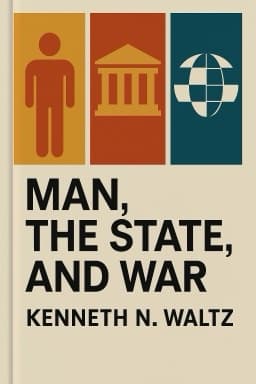
Beyond War and Peace: The Legacy of Kenneth Waltz’s Structural Realism
How Waltz’s ideas transformed our understanding of global politics and continue to influence today’s world.

In the realm of international relations, few theories have left as profound a mark as Kenneth Waltz’s structural realism.
Structural realism posits that the absence of a central authority compels states to prioritize survival through power balancing, alliances, and sometimes conflict. This perspective challenges idealist views that emphasize moral progress or international institutions as primary peacekeepers.
Waltz’s work sparked vibrant debates, inspiring critiques and expansions that incorporate ideas, norms, and institutions. Yet, his core insight—that the international system’s structure shapes state behavior—remains foundational.
Today, as the world faces rising multipolarity, regional conflicts, and shifting alliances, Waltz’s framework provides a vital lens to interpret these developments. Understanding the balance of power and security dilemmas helps policymakers navigate a complex landscape where cooperation and competition coexist.
Want to explore more insights from this book?
Read the full book summary