
Unlocking the Secrets of Global Conflict: Why Kenneth Waltz's Theory Still Matters
Dive deep into the groundbreaking insights that shaped how we understand war, peace, and power in the international arena.

In the complex world of international politics, understanding why states engage in conflict and how peace might be achieved has long challenged scholars and policymakers.
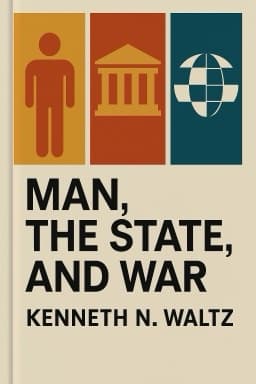
The book introduces a tripartite lens—often called the three images—that dissects the causes of war into three levels: the nature of individuals, the internal organization of states, and the anarchic structure of the international system. This approach profoundly shifted the field from focusing solely on individual leaders or state behavior to recognizing how the system’s architecture constrains and shapes state actions.
First, Waltz acknowledges human nature’s role, describing the tension between reason and passion, cooperation and conflict. While individuals’ flaws and virtues influence politics, they cannot fully explain the patterns of war that persist across centuries. The second image turns inward to states, highlighting how political regimes, social cohesion, and governance impact foreign policy. Democracies, for example, tend to be more peaceful with each other, while authoritarian regimes may be prone to aggression. Yet, internal state factors alone cannot account for the full complexity of international conflict.
The third and most influential image is the structure of the international system itself—characterized by anarchy, meaning no central authority governs states. In this self-help system, states must ensure their survival through power accumulation, alliances, and sometimes preemptive conflict. The security dilemma arises when one state’s defensive measures are perceived as threats by others, leading to arms races and heightened tensions. The balance of power thus becomes a fragile mechanism to maintain stability but is fraught with risks of miscalculation and war.
Waltz’s theory also warns of the limits of idealism. Efforts to impose peace or spread democracy, though noble, can backfire and provoke conflict. The complex interplay of economic interdependence, historical fears of future disadvantage, and competition over relative gains means peace is elusive and requires multifaceted, pragmatic strategies.
Critics argue that Waltz’s structural realism underestimates the role of ideas, norms, and international institutions. However, his framework continues to provide a vital foundation for understanding global politics, guiding scholars and leaders in navigating a world where cooperation and conflict coexist.
In sum, Waltz’s 'Theory of International Politics' remains a beacon illuminating the dark and often turbulent waters of international relations, reminding us that to seek peace, we must first understand the complex forces that drive war.
Want to explore more insights from this book?
Read the full book summary