
5 Ways the News Shapes Your Reality Without You Noticing
Unmasking the Hidden Filters That Control What You See and Believe

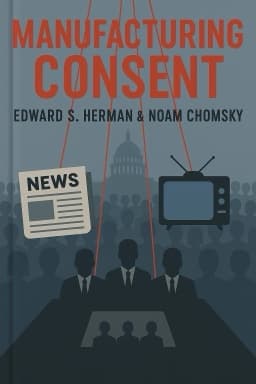
Have you ever wondered why some stories dominate the headlines while others slip by unnoticed? The answer isn't just about what sells newspapers or garners clicks. It's about a complex system of filters that shape the news long before it reaches your eyes. In their seminal work, 'Manufacturing Consent,' Edward S. Herman and Noam Chomsky laid bare the machinery behind mass media, revealing how a handful of interests can subtly, yet profoundly, influence public perception. Today, these insights are more relevant than ever, as the digital age amplifies both the reach and the subtlety of media manipulation.
1. Who Owns the News?
The first and perhaps most influential filter is ownership. Major media outlets are rarely independent; they are owned by large corporations or wealthy families whose interests extend far beyond journalism. These owners shape editorial policies, sometimes directly, but more often through the quiet influence of hiring decisions, resource allocation, and long-term strategy. When a media conglomerate also owns defense contractors or energy companies, can we really expect unbiased coverage of wars or environmental disasters? The result is a subtle but persistent alignment of news content with corporate interests, often at the expense of dissenting voices or inconvenient truths. 4
2. The Power of Advertising
Even the most respected newspapers and networks rely heavily on advertising revenue. This dependency creates an invisible leash: stories that might upset major advertisers are less likely to see the light of day. From pharmaceutical scandals to critiques of consumer culture, the risk of lost ad dollars leads to self-censorship at every level of the newsroom. The effect is cumulative, gradually narrowing the range of acceptable debate and reinforcing the status quo.
3. Sourcing: Who Gets to Speak?
Journalists need sources, and official sources—government agencies, corporate PR departments, and established experts—are the easiest to access. This creates a feedback loop in which the most powerful voices are amplified, while grassroots activists, whistleblowers, and marginalized communities struggle to be heard. The result? News that reflects the interests and perspectives of those already in power, often at the expense of deeper truth. 1
4. Flak: The Cost of Going Off-Script
When a media outlet steps outside the boundaries of acceptable discourse, it often faces organized backlash—letters to the editor, social media campaigns, or even legal threats. This 'flak' serves as a disciplinary mechanism, encouraging conformity and discouraging controversial reporting. The more powerful the offended party, the greater the flak, and the more likely it is that critical stories will be watered down or dropped altogether.
5. Ideology: The Lens Through Which We See
Finally, every society has its dominant ideologies—beliefs about what is right, just, or necessary. In the Cold War era, anticommunism colored every story; today, it might be market fundamentalism or national security. These ideologies shape not just what gets reported, but how it is framed. They determine who is a hero and who is a villain, whose suffering matters and whose does not.
How to See Through the Filters
Recognizing these filters is the first step toward media literacy. Seek out independent and international sources, question the motives behind headlines, and pay attention to what is not being said. By understanding the architecture of news, you can reclaim your agency as a consumer—and as a citizen.
Remember: the world is far more complex than any single narrative. Stay curious, stay critical, and never stop asking questions. 1 4
Want to explore more insights from this book?
Read the full book summary