
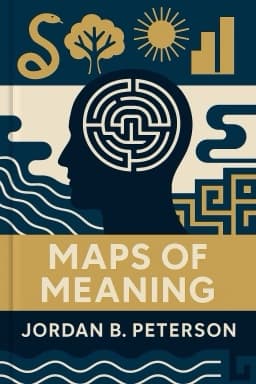
5 Secrets Hidden in 'Maps of Meaning' That Most Readers Miss
Uncovering the Lesser-Known Insights That Will Transform Your Perspective

Uncovering the Lesser-Known Insights That Will Transform Your Perspective
Jordan Peterson’s ‘Maps of Meaning’ is often described as a labyrinth—complex, dense, and at times overwhelming. But for those who venture beyond the surface, the book reveals a treasure trove of insights that can radically change the way you approach life’s challenges. Here are five secrets that most readers miss, but that could make all the difference in your journey toward meaning and resilience.
1. Myths Are Universal Survival Guides
Most people see ancient myths as outdated stories, but ‘Maps of Meaning’ shows that these tales encode survival strategies. Across cultures, the same narrative patterns—heroes leaving home, facing monsters, and returning transformed—appear again and again. These stories are not coincidences; they are blueprints for navigating the unknown.
2. Meaning Is Rooted in Biology
Meaning isn’t just a philosophical concept. Peterson draws on neuroscience to show that our brains are wired to seek coherence and purpose. When life makes sense, we feel joy and motivation; when it doesn’t, anxiety and confusion set in. Understanding this can help you recognize the importance of updating your beliefs and staying open to new experiences.
3. Growth Requires Confronting Chaos
Comfort is seductive, but it breeds stagnation. True growth happens when you voluntarily step into the unknown—whether it’s starting a new job, ending a relationship, or pursuing a dream. The hero’s journey isn’t just a story; it’s a psychological necessity.
4. Beware the Trap of Ideology
Rigid belief systems offer comfort but can quickly become prisons. Peterson warns that ideologies simplify reality, suppress dissent, and stifle curiosity. The antidote? Stay humble, curious, and willing to revise your map as new information emerges.
5. Transformation Is a Lifelong Cycle
Change is not a one-time event. The process of leaving the old behind, facing trials, and returning renewed repeats throughout life. Each crisis is an opportunity for rebirth, not just for individuals but for entire cultures.
By uncovering these secrets, you can approach life with greater resilience and creativity. The wisdom of ‘Maps of Meaning’ is not just for scholars—it’s for anyone willing to become the hero of their own story.
Sources:
1
2
3
Want to explore more insights from this book?
Read the full book summary