
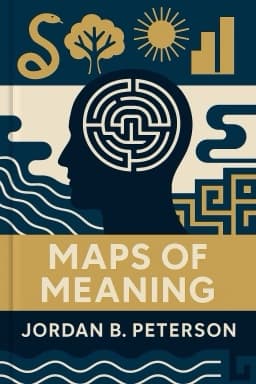
How 'Maps of Meaning' Explains the Modern Crisis of Purpose
Why So Many Feel Lost—and How Ancient Wisdom Offers a Way Forward

Why So Many Feel Lost—and How Ancient Wisdom Offers a Way Forward
Why do so many people today feel adrift, anxious, or purposeless? According to Jordan Peterson’s ‘Maps of Meaning,’ the answer lies in the collapse of shared belief systems and the loss of coherent narratives. In a world of rapid change and constant uncertainty, our old maps no longer guide us—and chaos rushes in to fill the void.
Peterson’s analysis draws on ancient myths, modern psychology, and cutting-edge neuroscience. He explains that humans are wired to seek meaning, and when our experiences fit within a coherent story, we feel grounded and motivated. But when the narrative breaks down—whether due to personal trauma, societal upheaval, or technological disruption—we experience anxiety, depression, and even despair. The hero’s journey, a pattern found in every culture, offers a way forward: by voluntarily confronting chaos, learning from it, and returning transformed, individuals can create new meaning even in the face of crisis.
The book warns against the lure of ideological possession, where rigid belief systems offer false certainty but suppress curiosity and adaptability. Instead, Peterson encourages readers to embrace the lifelong search for meaning, updating their maps as circumstances change. The process of breakdown and renewal is not just personal but collective—entire societies must periodically revise their narratives to survive and thrive.
‘Maps of Meaning’ offers hope in dark times. By reconnecting with the wisdom of myth and the courage of the hero’s journey, we can find purpose, resilience, and joy—even when the path ahead is unclear.
Sources:
1
2
4
Want to explore more insights from this book?
Read the full book summary