
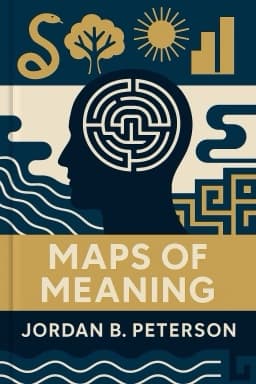
The Science Behind 'Maps of Meaning': How Your Brain Creates Purpose
From Fear to Curiosity: The Biological Roots of Meaning

From Fear to Curiosity: The Biological Roots of Meaning
Jordan Peterson’s ‘Maps of Meaning’ isn’t just a philosophical treatise—it’s also a guide to the biology of purpose. The book draws on neuroscience to explain why the search for meaning is a fundamental human drive. When we encounter something new, our brains react with a mix of fear (via the amygdala) and curiosity (via the dopamine system). This dual response prepares us to either retreat from danger or explore new opportunities.
Peterson argues that meaning emerges when our beliefs and experiences align—when the world makes sense. The brain rewards us with positive emotions, motivation, and a sense of coherence. When our maps fail, we experience anxiety, confusion, and a drive to adapt. Flexibility is key: those who can update their beliefs in response to new information are more resilient and better equipped to handle life’s challenges.
Recent research supports these ideas. Studies show that pattern recognition is central to human cognition, and that the brain’s reward system is activated when we solve problems or make sense of complex situations. By understanding the science behind meaning, readers can cultivate habits—like reflection, openness, and curiosity—that foster psychological well-being and adaptability.
‘Maps of Meaning’ thus bridges the gap between philosophy and neuroscience, offering practical insights for anyone seeking a purposeful, resilient life.
Sources:
1
2
4
Want to explore more insights from this book?
Read the full book summary