
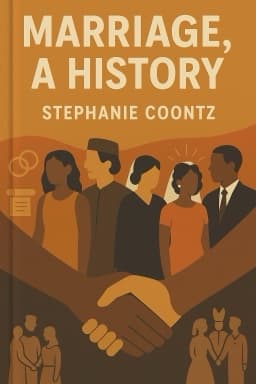
Why Your Ideas About Marriage Might Be Completely Wrong — The Shocking Truth From History
Uncover the surprising origins and evolution of marriage that challenge everything you thought you knew.

When we think about marriage today, we often picture a romantic union based on love, personal choice, and lifelong commitment. But what if I told you that this is a relatively recent invention?
In the earliest human societies, marriage was a practical tool designed to extend cooperation beyond the nuclear family. It created in-law relationships that linked different groups, strengthening survival chances in harsh environments. Imagine a tribe where marriage was a contract to share resources and labor rather than a romantic bond. This perspective alone challenges our modern assumptions about what marriage is and why it exists.
Moving forward in time, marriage became a central political instrument in ancient civilizations. Royal marriages were strategic moves to secure peace treaties and consolidate power. These unions often involved no personal choice and could lead to intense rivalries and intrigues. The story of princesses married off to rival kings to cement alliances reveals marriage’s role as a tool of statecraft rather than personal happiness.
It wasn’t until the late eighteenth century that the idea of marrying for love began to take hold in Western culture. The Enlightenment sparked a cultural revolution that emphasized free choice and emotional intimacy. Suddenly, marriage was seen as a partnership based on affection and mutual satisfaction. Yet, even this ideal was fraught with tension, as love-based marriages introduced new uncertainties about stability and commitment.
The iconic 1950s marriage model — with the male breadwinner and female homemaker — was not a timeless norm but the culmination of over 150 years of evolving ideals. This model emphasized companionship, clear gender roles, and economic specialization, but it was also historically exceptional. For most of human history, both men and women contributed economically to the household, making the single breadwinner family an anomaly rather than a rule.
Since the 1960s, marriage has undergone a crisis and transformation. Declining marriage rates, rising divorce, and the acceptance of diverse family forms reflect profound social and economic changes, including women’s increased workforce participation and demands for equality. Marriage is no longer a social necessity but a choice, with higher expectations for emotional fulfillment and partnership.
What’s more, marriage practices vary wildly across cultures and history. Polygamy, ghost marriages, same-sex unions, and non-cohabiting spouses demonstrate that marriage is a flexible social institution shaped by cultural and economic needs rather than fixed biological or legal definitions.
Understanding this rich history helps us navigate the future of marriage with wisdom and compassion. It reminds us that marriage is not a static ideal but a living institution constantly adapting to human needs and values. So next time you think about marriage, remember: its story is far more surprising and complex than fairy tales suggest.
This blog draws from multiple sources, including insightful reviews and analyses of Stephanie Coontz’s work, to bring you a comprehensive understanding of marriage’s evolution. 1 2 3 4
Want to explore more insights from this book?
Read the full book summary