
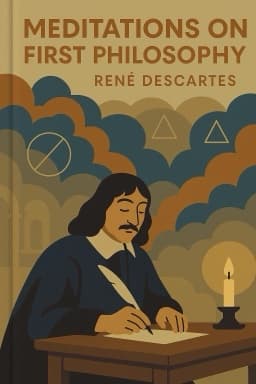
7 Surprising Life Lessons from Descartes’ Meditations That Will Change How You Think Forever
Unlocking the Power of Radical Doubt for a Wiser, Happier Life

Unlocking the Power of Radical Doubt for a Wiser, Happier Life
What if the secret to a better life began with doubt? René Descartes’ Meditations on First Philosophy is often seen as a dense, academic work reserved for philosophy majors, but its core ideas are more relevant—and more transformative—than ever. In an age of information overload, anxiety, and conflicting advice, Descartes’ method of radical doubt offers a toolkit for mental clarity and resilience. This blog unpacks seven life-changing lessons from the Meditations, showing how Descartes’ search for certainty can help you navigate uncertainty, build authentic self-confidence, and live with greater purpose.
1. Doubt Is the First Step to Wisdom
Descartes begins by doubting everything he has ever believed, from the evidence of his senses to the teachings of his childhood. While this might sound unsettling, it’s actually an act of intellectual courage. By questioning the foundations of our beliefs, we create space for genuine understanding and let go of inherited prejudices. Imagine clearing out a cluttered attic before renovating your home—only by making room can you rebuild on solid ground.
2. Self-Awareness Is the Ultimate Certainty
When all else is doubted, one truth remains: the act of thinking itself. Descartes’ famous insight, 'I think, therefore I am,' reminds us that our existence is rooted in conscious reflection. In a world obsessed with external achievement, this lesson is liberating. Your worth is not defined by what you own or what others think, but by your capacity for awareness and growth.
3. The Infinite Within: Embracing Possibility
Descartes explores the idea of infinity—not just as a mathematical concept, but as a symbol of our potential. He argues that the very idea of perfection points to something greater than ourselves, inspiring humility and awe. In everyday life, this means recognizing that our minds are capable of more than we imagine, and that openness to the unknown is a source of creativity and hope.
4. Mistakes Are Invitations to Growth
Error, Descartes teaches, arises when our will outruns our understanding. Instead of seeing mistakes as failures, we can view them as gentle reminders to slow down and seek clarity. This mindset shift transforms setbacks into opportunities for learning and self-compassion.
5. Mind and Body: Harmony, Not Conflict
Contrary to the stereotype of Descartes as a dualist who separates mind and body, he emphasizes their intimate union. Our thoughts, feelings, and sensations are intertwined, and true wisdom comes from honoring both. For anyone struggling with stress, burnout, or self-criticism, this lesson encourages a balanced approach to self-care—nurturing both mental and physical well-being.
6. Seek Clarity, Embrace Simplicity
Descartes’ rule of clarity and distinctness urges us to trust only those ideas that are as transparent as a crystal. In practice, this means simplifying our lives, focusing on what truly matters, and letting go of mental clutter. Whether you’re making a big decision or simply trying to find peace in a noisy world, clarity is your compass.
7. Philosophy as Self-Healing
Ultimately, Descartes believed that philosophy should heal the mind and guide us toward a life of virtue and joy. By integrating doubt, clarity, humility, and compassion, we can transform philosophy from an abstract discipline into a daily practice of self-care and renewal.
Conclusion: Living the Meditations
Descartes’ Meditations is not just a relic of intellectual history—it’s a living invitation to rethink, renew, and rediscover ourselves. By embracing doubt, cultivating clarity, and honoring our whole selves, we open the door to a wiser, more peaceful, and more authentic life. The journey is ongoing, and every question is a step forward.
For more on Descartes’ ideas and their impact on modern science and well-being, see these resources:
1
,
3
,
4
.
Want to explore more insights from this book?
Read the full book summary