
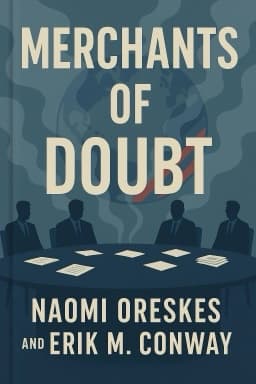
The Science of Confusion: Inside the Media’s Role in Spreading Manufactured Doubt
When 'Both Sides' Isn't Fair: How Newsrooms Helped Fuel Scientific Controversies

When 'Both Sides' Isn't Fair: How Newsrooms Helped Fuel Scientific Controversies
Why do so many people remain confused about issues where scientists overwhelmingly agree? The answer, as 'Merchants of Doubt' reveals, lies partly in the well-intentioned but ultimately damaging practices of the media. For decades, journalists have been trained to provide 'both sides' of every story. But when one side is supported by the vast majority of experts and the other by a handful of industry-funded dissenters, this balance becomes a distortion. The playbook of the doubt merchants depended on this: by insisting that their experts receive equal time, they turned minority views into apparent controversies, sowing confusion among the public.
Newspapers, television, and later digital platforms became amplifiers for these campaigns. Headlines highlighted controversy, not consensus, because conflict sells. The 24-hour news cycle demanded constant content, and dissenting voices provided ready drama. In the case of climate change, for example, a tiny group of skeptics appeared on TV and in print as often as leading climate scientists, despite the overwhelming evidence supporting human-caused warming. The result was a public that believed the science was unsettled, stalling political will and regulatory action.
Echo chambers and social media have accelerated this trend. Algorithms favor sensational or contrarian content, making it easier for misinformation to go viral. The blog discusses real-world examples from the book and recent news, showing how the tactics of the past have evolved in the digital age. The solution? Journalists must prioritize evidence over artificial balance, and readers must become more discerning—seeking out credible sources and learning to recognize false equivalence. Only then can the fog of manufactured doubt be lifted, allowing science to inform policy and protect the public good.
1
2
3
Want to explore more insights from this book?
Read the full book summary