
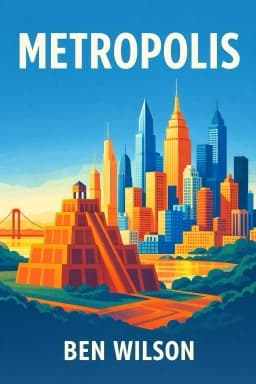
From Mud-Brick Temples to Smart Cities: The Epic Journey of Urban Civilization
Discover how humanity’s quest for order and community transformed wild landscapes into bustling metropolises.

Imagine a world where humans roamed freely, living in harmony with nature, until the dawn of cities reshaped our very existence. The story begins in the wetlands of southern Mesopotamia, where early humans crafted the first urban centers amidst challenging environments. These cities were not merely places to live but complex ecosystems where social cooperation, religious rituals, and environmental adaptation intertwined.
One of the most profound inventions emerging from these early cities was writing—born from the necessity to manage resources and trade. Clay tablets bearing cuneiform script marked the birth of recorded history, transforming human memory into lasting records. This administrative innovation laid the foundation for complex economies and governance.
Yet, cities were not utopias. The epic tale of Gilgamesh captures the tension between the wild and the civilized, the individual and the collective. Urban life brought protection and prosperity but also social stratification, disease, and political control.
Fast forward to the Indus Valley, where cities like Mohenjo-Daro showcased advanced urban planning with flush toilets and sophisticated drainage systems, challenging assumptions about ancient technology and social organization. Meanwhile, Babylon represented the dual nature of cities—monumental grandeur shadowed by moral decay and excess.
Ancient Greece introduced a new chapter, pioneering democracy and public discourse in the agora and the Pnyx. Here, citizens actively shaped their city’s fate, blending commerce, politics, and culture in vibrant public spaces.
Imperial Rome expanded urban life to unprecedented scales, with monumental architecture and public baths serving as social equalizers. These spaces transcended class and fostered a shared identity among diverse populations.
The modern metropolis emerged as cities sprawled horizontally, fueled by car dependency and creating new economic hubs known as edge cities. This sprawling growth brought both opportunity and challenges, including environmental impact and social fragmentation.
Yet, the heart of many megacities beats in their informal economies and settlements—dynamic hubs of entrepreneurship and resilience where millions forge livelihoods and innovate despite adversity.
Today, cities face the urgent need to adapt to climate change and social inequalities. Through green infrastructure, smart technologies, and inclusive community engagement, urban centers are evolving toward sustainability and resilience, striving to harmonize nature and human life.
This epic journey from mud-brick temples to smart cities reveals the enduring complexity and promise of urban life. Cities are not static monuments but living processes, continually shaped by human dreams, challenges, and ingenuity.
Want to explore more insights from this book?
Read the full book summary