
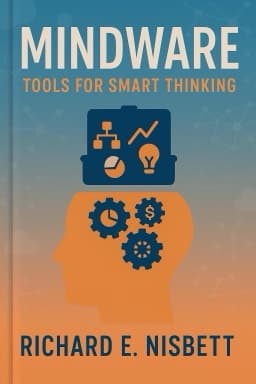
The Science of Better Choices: Mindware’s Guide to Smarter Living
How Mindware’s Proven Strategies Can Transform Your Everyday Life

Imagine having a personal toolkit that helps you navigate life’s toughest decisions with clarity and confidence. That’s what Richard Nisbett’s 'Mindware' provides—a set of mental tools, rooted in science, that can be applied to everything from buying a home to raising a child. The book is packed with actionable advice, real-world examples, and research-backed strategies that make smart thinking accessible to everyone.
Cost-Benefit Analysis for Life: One of the most valuable tools in the book is cost-benefit analysis. Whether you’re deciding where to live, what job to take, or how to spend your free time, weighing the pros and cons can help you make choices that align with your values and goals. Nisbett encourages readers to look beyond immediate gratification and consider long-term consequences—a skill that pays dividends in every area of life.
Opportunity Cost and Resource Allocation: Every decision involves trade-offs. By recognizing what you’re giving up when you choose one option over another, you can make more informed choices. This mindset is especially useful in managing finances, career planning, and even personal relationships.
Statistical Reasoning in Action: From understanding medical risks to evaluating job offers, statistical thinking is a superpower. Nisbett explains how to interpret data, avoid being misled by small samples, and recognize when randomness is at play. These skills are essential for making sense of the flood of information we encounter every day.
Self-Compassion and Growth: The journey to smarter living isn’t about perfection—it’s about progress. Nisbett highlights the importance of self-compassion, reminding readers that everyone makes mistakes. By learning from errors and being kind to ourselves, we build resilience and foster lifelong growth.
Conclusion: 'Mindware' is more than a book—it’s a blueprint for living well. By adopting its tools, you can become a more effective thinker, a better decision-maker, and a happier, more fulfilled person.
Want to explore more insights from this book?
Read the full book summary