
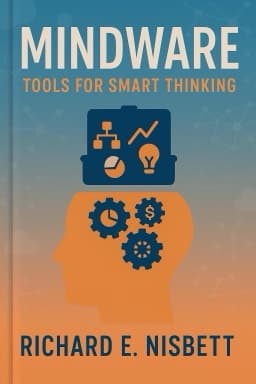
Unlocking the Hidden Power of Your Mind: Surprising Lessons from Mindware
Discover the Essential Tools That Will Change the Way You Think Forever

Have you ever wondered why two people can interpret the same event in completely different ways? Or why you sometimes make decisions that, in hindsight, seem irrational? Richard Nisbett’s 'Mindware: Tools for Smart Thinking' offers a roadmap for navigating these questions and more. The book is a masterclass in cognitive psychology, distilling decades of research into actionable tools that anyone can use to think smarter and live better.
The Architecture of Perception: Nisbett starts by revealing that our minds don’t simply record reality—they construct it. We filter every experience through mental frameworks called schemas, which help us interpret new information quickly but can also lead us astray. For instance, if you expect someone to be adventurous, you’ll see their ambiguous actions as bold; if you expect recklessness, the same actions seem dangerous. This insight is crucial for understanding both ourselves and others.
The Power of Context: One of the book’s most powerful lessons is that situations matter far more than we think. We’re quick to attribute actions to personality, but research shows that context often plays a bigger role. For example, students living with studious roommates tend to study more, while those with party-loving roommates are more likely to drink. Even randomly assigned roles can change behavior—people quickly adopt the attitudes and actions expected of their new status. Understanding this can make us more compassionate and less judgmental.
The Rational Unconscious: Nisbett also explores the mind’s hidden processes. Many breakthroughs happen after a period of unconscious incubation—solutions to problems often come when we’re not actively thinking about them. This is why taking a walk or sleeping on a problem can be so effective. Our unconscious mind is always working in the background, processing information and delivering insights when we least expect them.
Thinking Like an Economist: The book teaches us to apply economic principles like opportunity cost and cost-benefit analysis to everyday decisions. Every choice means giving up something else, and recognizing this can help us make better decisions. Nisbett warns against the sunk cost fallacy—don’t let past investments dictate future choices. Instead, focus on what will bring the most benefit moving forward.
Statistical Thinking: In a world awash with data, statistical reasoning is essential. Nisbett explains why large samples give better estimates, why interviews are often poor predictors of future performance, and why we’re prone to seeing patterns in randomness. Learning to think statistically helps us avoid common pitfalls and make more informed decisions.
Causality and Logic: The book cautions against confusing correlation with causation and highlights the importance of randomized experiments for discovering true effects. Nisbett also discusses the art of building good theories—those that are simple, testable, and explanatory. Both formal logic and dialectical thinking are needed to navigate the complexities of the world.
From Insight to Action: Understanding how we think isn’t just an intellectual exercise—it can improve our lives and society. Nisbett shows how smart policy design, such as setting beneficial defaults or using gentle nudges, can lead to better outcomes without restricting freedom. These insights are used in everything from retirement plans to public health campaigns.
Wisdom for Life: Ultimately, 'Mindware' is about growth. The tools Nisbett offers are teachable and can be practiced throughout life. By understanding our mind’s limits and strengths, we become more resilient, compassionate, and wise. The book closes with a call to lifelong learning and self-compassion, reminding us that the logic of science is also the logic of life.
Whether you’re a student, a professional, or simply curious about how to think better, 'Mindware' provides a toolkit for navigating the world with greater clarity and kindness. The journey through its pages is both soothing and empowering, offering hope that anyone can become a smarter, more thoughtful version of themselves.
Want to explore more insights from this book?
Read the full book summary