
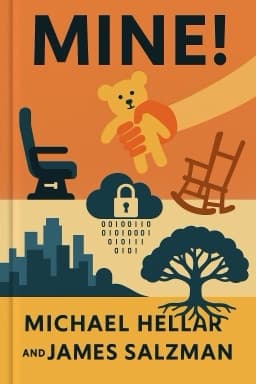
Line Standing, Parking Chairs, and Digital Bots: The Wild World of Modern Ownership
How Waiting in Line Became Big Business and What It Reveals About Ownership

How Waiting in Line Became Big Business and What It Reveals About Ownership
Imagine paying a stranger to stand in line for hours so you don’t have to. This is no longer a quirky anecdote but a booming business model in cities worldwide. From securing Supreme Court seats to grabbing the latest tech gadget, line standing has become a tradable commodity, transforming time into money.
Why does this matter? Because it challenges the age-old principle of 'first come, first served' — a rule that underpins fairness in access to scarce resources. When wealth can buy your place in line, fairness becomes relative. This shift reflects broader changes in ownership design where economic power can override traditional social norms.
Take Boston’s infamous parking chair phenomenon. After a historic blizzard, residents began placing chairs in cleared snow spots to claim them. What started as a practical solution evolved into a symbolic language of possession. Chairs, cones, and even vacuum cleaners became markers of ownership, sparking neighborhood disputes and legal gray areas. These objects communicate claims without words, revealing how possession is both physical and social.
On airplanes, seat saving wars rage with jackets, laptops, and iPads serving as placeholders. The unspoken rules vary by culture and situation, often leading to confrontations. This microcosm highlights how ownership extends beyond legal rights to social expectations and behavioral norms.
Technology adds another twist. Automated bots buy up thousands of tickets within milliseconds, outpacing human buyers and reselling at high premiums. This disrupts fairness and forces industries to innovate new ticketing systems. The digital realm thus complicates ownership by blending speed, automation, and market forces.
Underlying all these examples is a primal instinct: possession is deeply wired into our brains. Studies show that physically holding something increases its perceived value, a phenomenon called the endowment effect. This explains why people fiercely defend possessions, even symbolic ones like parking chairs or seat placeholders.
Through these stories, we see that ownership is not static but a dynamic interplay of physical control, social signaling, economic incentives, and technology. Understanding these layers helps us appreciate the complexity behind everyday acts and the design choices shaping our access and fairness.
Next, we will explore how ownership rooted in labor and creativity shapes innovation and culture, revealing tensions between protection and sharing.
Want to explore more insights from this book?
Read the full book summary