
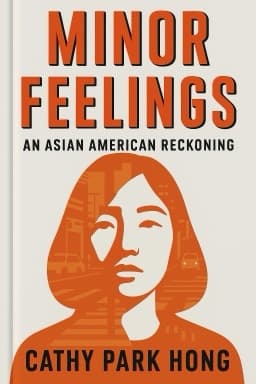
Unpacking the Silent Struggles: How 'Minor Feelings' Reveals the Hidden Pain of Asian American Identity
Discover the emotional undercurrents shaping Asian American lives through a powerful blend of memoir and cultural critique.

In a society that often celebrates the myth of the model minority, Cathy Park Hong’s Minor Feelings pierces through the veil of invisibility to reveal the quiet, persistent emotional struggles that many Asian Americans endure. These are not grand traumas but subtle, cumulative feelings—shame, melancholy, irritation—that Hong calls 'minor feelings.' They arise from everyday encounters with racial dismissal and invisibility, creating a unique emotional landscape shaped by cognitive dissonance between societal optimism and lived reality.
Hong’s essays trace the historical roots of these feelings, starting with the selective immigration policies of the 1960s that favored highly educated Asians, which laid the foundation for the model minority stereotype. This stereotype, far from being a harmless compliment, was deliberately constructed to uphold capitalist ideals and to undermine the legitimacy of other minority civil rights struggles. It masks the diversity and struggles within Asian American communities, ignoring those who fall outside the narrow bounds of success.
Language and art emerge as crucial sites of resistance in Hong’s narrative. She explores how 'bad English'—nonstandard, accented, hybrid forms of English—becomes a powerful tool to assert identity and challenge assimilationist pressures. Stand-up comedy, too, offers a raw, immediate platform to confront racial identity and trauma, breaking down barriers of invisibility through humor and vulnerability.
Personal stories of family, friendship, and mental health reveal the profound emotional toll of racial trauma. From intergenerational trauma passed down by grandparents fleeing war to the painful experience of therapist rejection, Hong’s narrative humanizes the statistics and stereotypes, showing the resilience and complexity beneath.
Hong also critically examines the concept of 'white innocence,' a cognitive blindness that protects white individuals from confronting systemic racism and their own privilege. This innocence functions as both a shield and a handicap, perpetuating denial and defensive backlash that hinder racial progress.
The book culminates in a call to embrace intersectionality, recognizing the diverse and overlapping identities within Asian American communities. This complexity enriches the collective narrative and challenges simplistic stereotypes, fostering empathy and solidarity across differences.
Ultimately, Minor Feelings is a hopeful reckoning. By acknowledging and embracing these often-dismissed emotions, Asian Americans—and indeed all readers—are invited to a deeper understanding of themselves and their communities. Art and creative expression are highlighted as vital tools for healing and empowerment, opening pathways toward a more just and compassionate society.
This profound work not only challenges readers to confront uncomfortable truths but also offers a path toward healing through recognition and solidarity. It is a must-read for anyone seeking to understand the nuanced realities of race, identity, and emotion in contemporary America.
For further reading and detailed analysis, see insightful reviews and summaries from Yale Review, SuperSummary, LitCharts, and The Georgia Review. 1 2 3 4
Want to explore more insights from this book?
Read the full book summary