
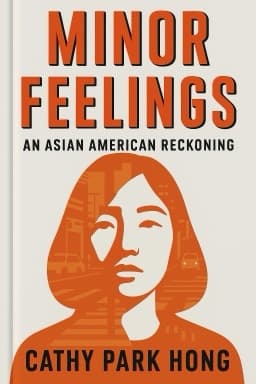
Why 'Minor Feelings' Is More Than a Memoir: A Cultural Reckoning That Demands Your Attention
A deep dive into how Cathy Park Hong’s essays reshape conversations about race and identity in America.

At first glance, Cathy Park Hong’s Minor Feelings might appear to be a memoir—a collection of personal essays reflecting on her experiences as an Asian American woman. But this book is much more than a recounting of individual stories; it is a cultural reckoning that challenges readers to reconsider the narratives that shape race and identity in America.
Hong’s work starts by naming the 'minor feelings'—those subtle, often dismissed emotions that arise from living in the shadow of racial invisibility and exclusion. These feelings are not isolated incidents but accumulate over time, fueled by microaggressions and the dissonance between the American Dream and the reality of systemic racism.
The model minority myth looms large throughout the essays. Hong exposes its origins as a deliberate political tool designed to uphold capitalist values and to pit Asian Americans against other minority groups, particularly African Americans. This myth simplifies a diverse population into a single stereotype of success, masking the struggles of many and perpetuating racial divisions.
Language becomes a battleground in Hong’s narrative. The deliberate use of 'bad English'—a mix of accented, broken, and hybrid forms—subverts the standard language expectations and asserts a unique cultural identity. Performance arts, especially stand-up comedy, provide a visceral space where racial tensions are confronted head-on, using humor as both shield and sword.
Hong also lays bare the emotional costs of racial trauma within intimate relationships. From stories of family displacement and generational trauma to the experience of mental health stigma and therapist rejection, the book humanizes the often invisible wounds carried by many Asian Americans.
The concept of white innocence is a critical lens Hong uses to analyze how systemic racism persists. This innocence is not ignorance but an active refusal to acknowledge racial realities, serving to protect privilege and maintain social hierarchies. The emotional dynamics of shame and contempt further complicate these interactions, sometimes leading to defensive backlash rather than progress.
Intersectionality is another vital theme. Hong challenges the idea of a monolithic Asian American identity by highlighting the varied and intersecting identities within the community—across ethnicity, gender, class, sexuality, and religion. This complexity demands more inclusive and nuanced approaches to representation and social justice.
In the end, Minor Feelings is a call to embrace these often-overlooked emotions as a path toward healing and empowerment. Through art, narrative, and community, Asian Americans—and all readers—can find ways to reclaim their stories and forge solidarity.
This book is essential reading for anyone interested in race, identity, and the power of storytelling to transform society. It invites us to look beyond surface-level narratives and engage deeply with the emotional truths that shape our collective experience.
For more insight, consult detailed analyses and reviews from Yale Review, LitCharts, SuperSummary, and The Georgia Review. 1 2 3 4
Want to explore more insights from this book?
Read the full book summary