
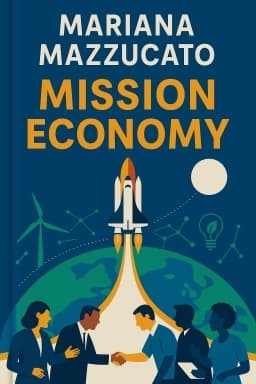
Beyond the Moonshot: How Mission-Driven Innovation Transforms Society
The Surprising Ways Bold Missions Create New Technologies and Social Opportunities

The Surprising Ways Bold Missions Create New Technologies and Social Opportunities
Bold missions often yield benefits far beyond their initial goals, generating innovations and social progress that permeate everyday life. The Apollo program, while focused on landing humans on the moon, catalyzed advances that reshaped industries and expanded opportunities.
Technologies developed for space travel found new homes in implantable pacemakers, shock-absorbing foam for athletic footwear, and freeze-dried foods used in emergencies and camping. Apollo’s demand for miniaturized electronics drove the semiconductor industry, purchasing about 60% of US integrated circuits at its peak, laying the foundation for the personal computing revolution.
Socially, the surge in computing jobs opened doors for women and African Americans in STEM, challenging norms and fostering inclusion. Figures like mathematician Katherine Johnson became emblematic of this progress.
These spillovers—unforeseen benefits flowing from focused innovation—highlight the power of setting ambitious goals. They ignite creativity across disciplines and sectors, creating ripple effects that enrich society.
Today, mission-oriented policies that prioritize inclusion and equity can replicate these outcomes, driving economic growth that benefits all.
In our next post, we will examine how financing models must evolve to support such transformative missions.
Sources: The Guardian, LSE Review of Books, NSER Review, Amazon reader insights 1 2 3 4
Want to explore more insights from this book?
Read the full book summary