
Why ‘Mission Economy’ Is the Game-Changer Capitalism Desperately Needs
How a Moonshot Mindset Could Revolutionize Our Economy and Save the Planet

How a Moonshot Mindset Could Revolutionize Our Economy and Save the Planet
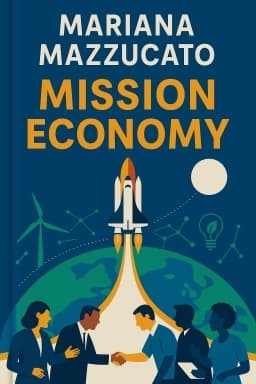
At a time when the world faces unprecedented economic, social, and environmental challenges, Mariana Mazzucato’s Mission Economy emerges as a clarion call for bold systemic change. Inspired by the Apollo program—the audacious effort that landed humans on the moon—the book argues that capitalism must be reoriented around clear, ambitious missions that unite public and private actors towards common goals.
The current economic system, dominated by financial speculation and short-termism, has failed to deliver broadly shared prosperity or address the climate emergency effectively. Only about 20% of finance flows into productive investments, while wages stagnate despite rising productivity. Meanwhile, fossil fuel subsidies persist, undermining climate efforts. Mazzucato highlights these structural flaws to show why incremental reforms are insufficient.
By contrast, the Apollo mission exemplifies how a clear, purpose-driven vision can mobilize resources, inspire innovation, and achieve what once seemed impossible. At its peak, Apollo consumed 4% of the US federal budget, involved over 300,000 people, and accelerated the development of software engineering and semiconductor industries. These spillovers transformed society far beyond space exploration.
Central to this transformation was a new model of governance and finance: outcome-based budgeting focused on achieving defined goals rather than controlling inputs. Governments took on early-stage risks that private investors avoided, forging flexible contracts emphasizing societal outcomes. Matrix management broke down bureaucratic silos, empowering teams to innovate rapidly.
Moreover, the mission economy demands purposeful partnerships between government and business, sharing risks and rewards to co-create markets that serve the common good. Public investment acts as a catalyst for private sector growth, especially in high-risk areas like pharmaceuticals and clean energy.
Inclusive governance and citizen participation further enrich missions, ensuring policies reflect diverse societal needs and build trust. Participatory budgeting, citizen assemblies, and digital engagement platforms exemplify this democratic innovation.
Finally, the book emphasizes predistribution—designing economic rules so wealth creation is fair from the outset, not just redistributed later. Public wealth funds, cooperative ownership models, and equitable labor policies are key tools to achieve this.
In sum, Mission Economy offers a hopeful, practical roadmap for transforming capitalism into a system that delivers innovation, equity, and sustainability. It challenges us to rethink the role of government, finance, and society in shaping the future. As we face urgent global crises, adopting a mission-oriented mindset may be our best chance to build a thriving, just economy for all.
For those eager to explore these ideas in depth, this blog series will unpack each core theme, connecting historical lessons with contemporary policy debates and inspiring examples from around the world.
Join us as we journey through the mission economy and envision a new path forward.
Sources: The Guardian review of Mission Economy, LSE Review of Books, NSER Review, Amazon reader insights 1 2 3 4
Want to explore more insights from this book?
Read the full book summary