
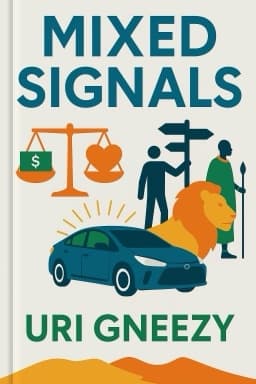
Why Your Incentives Are Failing: The Shocking Truth About Mixed Signals
Discover how poorly designed incentives can backfire and what you can do to fix them for better results.

Incentives are everywhere—from the bonuses your company offers to the small rewards you give yourself for a job well done. But why do so many incentive programs fail to produce the results they promise? The answer lies in the subtle and powerful language of signals. Uri Gneezy's book "Mixed Signals" reveals that incentives are not just about dollars and cents; they are about the messages we send and receive, shaping identities, behaviors, and social dynamics in profound ways.
Take the example of tattoos in biker culture. Unlike a leather jacket or boots, a tattoo is a permanent, costly signal that communicates commitment and identity. It’s not just about appearance; it’s about credibility. Similarly, early hybrid car buyers accepted inferior performance to signal environmental values, demonstrating how incentives and signals intertwine to influence choices beyond pure utility.
But signals can also get mixed up. When a call center rewards employees for the number of calls handled but demands quality service, the message becomes confusing. Workers naturally focus on what is measured and rewarded—quantity—often at the expense of quality. Historical examples like railroad companies paid per mile of track built or Soviet factories incentivizing glass weight show how quantity-based incentives without quality checks lead to disastrous outcomes.
So what can be done? The answer is to design incentives with clarity and credibility, aligning what you say with what you reward. Adding customer ratings to rideshare drivers’ pay structure is one way to balance speed and service quality, turning mixed signals into clear ones.
Innovation thrives in environments where failure is not punished but embraced. The Israeli Air Force’s culture of treating near-accidents as learning opportunities and pharmaceutical companies rewarding scientists who kill failing projects early highlight how incentivizing fast failure accelerates progress.
Long-term success demands incentives that look beyond immediate gains. CEOs pressured by short-term stock prices may sacrifice future growth, while education systems focused on standardized tests risk stifling creativity. Countries like Finland show that autonomy and trust produce better outcomes than rigid, short-term incentives.
Team incentives present another challenge. Individual bonuses can spark competition and conflict, while team rewards encourage cooperation but risk free riding. The key is balancing these forces to foster collaboration without sacrificing personal motivation.
Finally, incentives shape the stories people tell about themselves and others. Anticipated regret motivates action, and small noncash rewards like pens or medals reinforce identity and social recognition without undermining intrinsic motivation.
By mastering these insights, you can craft incentives that inspire genuine effort, align with values, and drive sustainable success.
For more details and practical examples, explore Uri Gneezy’s
Want to explore more insights from this book?
Read the full book summary