
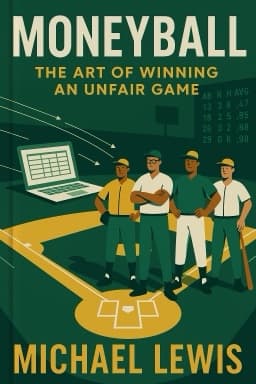
How Moneyball Changed the Game: The Data Revolution That Shook Baseball and Business
Discover how Michael Lewis’s Moneyball sparked a global analytics movement.

Picture the world of baseball at the dawn of the 21st century: a landscape dominated by tradition, where the richest teams routinely outspent the rest and the old guard of scouts relied on gut feeling and folklore. Then came the Oakland Athletics and a general manager named Billy Beane, who dared to ask: What if we stopped trusting our eyes and started trusting the numbers? This was the audacious premise at the heart of Michael Lewis’s Moneyball—a book that not only transformed baseball, but also ignited a revolution in how we think about value, talent, and strategy in every field of human endeavor.
Moneyball’s story begins with a simple but powerful insight: financial resources don’t guarantee victory. The Yankees had three times the payroll of the A’s, yet the A’s consistently found ways to win. How? By embracing sabermetrics—the empirical analysis of baseball statistics. Instead of focusing on traditional stats like batting average or home runs, the A’s prioritized on-base percentage and other undervalued metrics, seeking players who contributed quietly but consistently. This approach uncovered hidden gems—players overlooked by other teams because they didn’t fit the mold, but who, according to the data, were bargains waiting to be discovered.
The impact was immediate and dramatic. The A’s set a modern American League record with a 20-game win streak and reached the playoffs with one of the lowest payrolls in baseball. Their success forced the rest of the league to take notice, and soon, every team was hiring analysts and building their own data departments. The analytics revolution didn’t stop at baseball. Businesses, hospitals, and even political campaigns began to apply Moneyball principles, using data to challenge assumptions, optimize performance, and uncover value where others saw none. Moneyball teaches us that the courage to innovate—and the discipline to measure what matters—can level the playing field for underdogs everywhere.
At its core, Moneyball is not just about numbers, but about the human spirit—the willingness to question, to adapt, and to persist against the odds. It’s a story of hope for anyone who has ever felt outmatched or underestimated. The game has changed, and the lessons of Moneyball echo far beyond the diamond, inspiring leaders and dreamers in every walk of life.
Ready to learn how you can apply these lessons to your own challenges? Keep reading for a deep dive into the key ideas and their real-world applications. 1 2 4
Want to explore more insights from this book?
Read the full book summary