
Quantitative Revolution: How Math and Computers Took Over Hedge Funds and Changed Investing Forever
From chalkboards to supercomputers, discover how academics transformed hedge funds through data and algorithms.

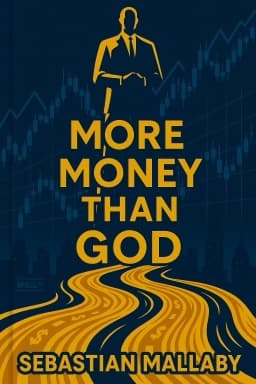
In the evolution of hedge funds, one of the most transformative chapters is the rise of quantitative investing. Sebastian Mallaby’s More Money Than God chronicles how brilliant economists and mathematicians brought scientific rigor and computational power to the art of trading.
The founding of the Commodities Corporation marked a turning point. This firm combined econometric models with real-world trading, hiring rocket scientists and economists to build predictive models. Their approach was data-driven and systematic, a stark contrast to intuition-based investing.
Yet, the journey was not without peril. The corn blight crisis, where a major bet on agricultural disease went awry, exposed the limits of even the most sophisticated models.
Over time, quantitative strategies expanded to include trend-following, high-frequency trading, and complex derivatives. These advances reshaped markets and challenged traditional notions of market efficiency.
The infusion of academic rigor attracted Nobel laureates and top economists, lending intellectual prestige to hedge funds. Their work blurred the lines between Wall Street and academia, creating a fertile ground for innovation.
This revolution continues today, with algorithms and big data analytics at the forefront of investment strategy. Understanding this history reveals how technology and human insight combine to drive modern finance.
Want to explore more insights from this book?
Read the full book summary