
Reflexivity and Market Psychology: The Hidden Forces Driving Financial Booms and Busts
Uncover how investor beliefs shape markets, creating cycles of boom and bust that defy traditional economic theories.

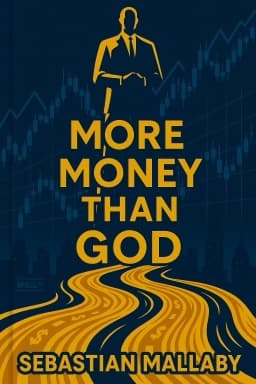
Markets are often viewed as efficient mechanisms that instantly reflect all available information. Yet, Sebastian Mallaby’s More Money Than God introduces us to the concept of reflexivity, a theory that turns this view on its head.
Reflexivity posits that market prices are not just passive reflections of reality but active forces that shape it. When investors believe a currency or stock will rise, their actions can cause it to rise, creating feedback loops that amplify trends.
A dramatic demonstration of this theory unfolded in a massive currency trade, where a hedge fund’s bold wager against a major currency precipitated a devaluation that reverberated worldwide.
Understanding reflexivity equips investors to anticipate and navigate the psychological undercurrents that drive financial markets. It reveals why booms and busts occur, often disconnected from fundamental values, and how savvy players exploit these dynamics.
Reflexivity also highlights the limits of models that ignore human behavior, emphasizing the need for a holistic approach to investing that blends quantitative analysis with behavioral insight.
In a world where perception can become reality, mastering reflexivity is key to thriving amid financial uncertainty.
Want to explore more insights from this book?
Read the full book summary