
How a Stroke Unlocked the Secrets of the Mind: A Scientist’s Journey Inside Her Own Brain
Discover the astonishing story of a brain scientist who experienced a stroke and uncovered profound truths about consciousness, healing, and the human mind.

Introduction: When Science Meets Personal Crisis
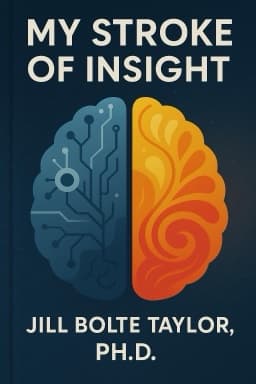
Imagine being a brain scientist who suddenly experiences the very trauma she studies—a hemorrhagic stroke that disrupts the left hemisphere of her brain. This was the reality for Jill Bolte Taylor, whose memoir 'My Stroke of Insight' takes us deep into the inner workings of the brain and the profound transformation that followed her injury.
The Brain’s Dual Nature: Left and Right Hemispheres
Taylor’s stroke affected her left hemisphere, responsible for language, logic, and linear thinking. As this side shut down, she lost her ability to speak, read, and process time sequentially. Meanwhile, her right hemisphere—the seat of intuition, emotion, and holistic awareness—became dominant. She describes a state of timelessness, peace, and unity with the universe, free from the constraining internal chatter of the left brain.
This hemispheric shift is not just a medical phenomenon but a doorway to understanding consciousness itself. The left brain’s constant verbal dialogue organizes our experience, but it can also create stress and separation. The right brain invites us into the present moment, where boundaries dissolve and pure experience unfolds.
The Stroke Experience: Loss and Discovery
During the stroke, Taylor experienced paralysis, loss of memory, and disconnection from her body. Yet, amid confusion and fear, she found a profound sense of detachment from ego and a deep connection to all living things. This paradoxical experience highlights the fragile architecture of identity—how much of who we are depends on intact brain function.
Her narrative also sheds light on the emotional and sensory challenges stroke survivors face, including hypersensitivity and communication difficulties. The journey of recovery is slow and demanding, requiring immense patience and energy management.
Recovery and Neuroplasticity: Rebuilding the Self
Taylor’s recovery demonstrates the brain’s remarkable plasticity—the ability to rewire and relearn lost functions. Through repetitive, childlike learning methods and ample rest, she gradually regained language, movement, and cognitive abilities. This process underscores the importance of compassionate care, sleep, and emotional support in healing.
Her story inspires hope for stroke survivors and anyone facing neurological challenges, showing that recovery is possible and that trauma can lead to profound personal growth.
Spiritual Insights from Neuroscience
Perhaps most striking is how Taylor’s experience bridges science and spirituality. The right hemisphere’s dominance brought feelings akin to mystical states described in various traditions—oneness, bliss, and transcendence beyond ego. Neuroimaging supports these experiences, linking spiritual states to increased right brain activity and decreased left brain chatter.
This suggests that consciousness is more than language and logic; it includes deep nonverbal awareness and emotional unity. Taylor’s insights invite us to explore new dimensions of self and reality, grounded in both biology and spirituality.
Conclusion: Embracing the Dance of Dual Minds
Jill Bolte Taylor’s journey reveals the delicate balance between the left and right hemispheres and how their harmony shapes our experience. Her stroke was both a devastating loss and a profound awakening, teaching us about resilience, healing, and the expansive nature of consciousness.
By honoring both halves of the brain, nurturing rest, and embracing presence, we can cultivate greater peace and understanding in our lives. Her story is a testament to the power of the human brain and spirit to transform adversity into insight.
Whether you are interested in neuroscience, spirituality, or personal growth, 'My Stroke of Insight' offers a compelling narrative that challenges and inspires.
For further exploration, visit ANCDS Book Review, SuperSummary, and Four Minute Books for additional perspectives. 1 2 3
Want to explore more insights from this book?
Read the full book summary