
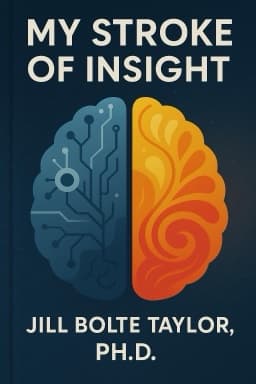
The Stroke of Insight: A Deep Dive into Brain, Consciousness, and Healing
An in-depth exploration of how a stroke transformed a neuroscientist’s understanding of the brain and consciousness, blending science with spiritual awakening.

Introduction: From Scientist to Patient
Jill Bolte Taylor’s experience of a hemorrhagic stroke while studying the brain gave her a unique vantage point to witness consciousness unravel and reassemble.
The Left Brain’s Role and Its Sudden Silence
The left hemisphere governs language, logic, and linear time processing. When Taylor’s left brain was flooded with blood, she lost speech, memory, and the ability to sequence events. This loss plunged her into a timeless, wordless state dominated by the right hemisphere’s holistic awareness.
The Right Brain’s Expansive Awareness
The right hemisphere perceives the world as interconnected and present. Taylor’s stroke revealed this side’s capacity for deep peace, empathy, and unity with the environment. This state aligns with descriptions of spiritual enlightenment and has a neurological basis in increased right brain activity and reduced left brain chatter.
Challenges of Stroke and the Path to Recovery
Stroke survivors face paralysis, sensory overload, and emotional upheaval. Taylor’s recovery involved relearning skills through repetitive exercises, managing energy, and prioritizing sleep. Compassionate care and patience are essential in this slow healing process.
Bridging Science and Spirituality
Taylor’s journey bridges neuroscience and spirituality, suggesting that consciousness includes nonverbal, timeless awareness beyond language. This insight invites a broader understanding of self and existence.
Conclusion: Embracing a New Perspective
The stroke was both a crisis and a catalyst for transformation. It revealed the brain’s resilience and the profound interplay between its hemispheres. Taylor’s story encourages us to cultivate balance, presence, and compassion in our own lives.
For further reading, visit ANCDS, SuperSummary, and Caryn Writes for more insights. 1 2 4
Want to explore more insights from this book?
Read the full book summary