
From Division to Connection: Harnessing Integrative Dynamics in Conflict Resolution
Learn how positive forces can transform conflict into cooperation and lasting relationships.

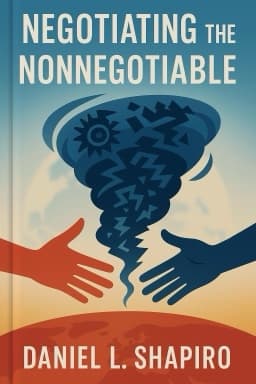
Conflict often feels like a tug-of-war, pulling parties apart. Yet beneath the surface lies a powerful current pulling toward connection and cooperation. Daniel Shapiro’s Negotiating the Nonnegotiable calls these forces integrative dynamics.
Integrative dynamics include empathy, shared goals, and mutual respect. They enable conflicting parties to transcend zero-sum thinking and find collaborative solutions that benefit all.
Central to this process is managing the tension between autonomy — the need to be oneself — and affiliation — the desire to belong. This relational dialectic is a dance requiring sensitivity and balance.
Shapiro illustrates how building shared narratives can weave together diverse perspectives into a cohesive story, fostering understanding and trust. Leaders, mediators, and individuals can apply these principles to create safe spaces for dialogue and co-creation.
For example, in organizational conflicts, focusing on common mission and values helps employees move beyond personal grievances toward collective success.
By cultivating these forces, we can turn division into unity and build relationships that endure beyond the conflict.
Sources: Harvard Program on Negotiation, Blinkist summary, Amazon reviews [[3]](#__3) [[2]](#__2) [[0]](#__0)
Want to explore more insights from this book?
Read the full book summary