
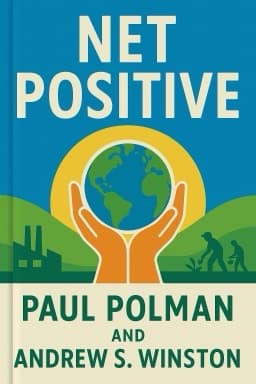
Why ‘Net Positive’ is the Bold New Business Revolution You Can’t Ignore
Discover how courageous companies are thriving by giving more than they take—and why your business must follow suit.

In today’s rapidly changing world, businesses face unprecedented pressure to not only minimize harm but actively create positive impact. The concept of net positive business has emerged as a clarion call for courageous companies ready to lead this transformation. But what does it mean to be net positive? At its core, it means
Imagine a company that doesn’t just reduce emissions but innovates so profoundly that it actually restores ecosystems or improves community well-being beyond its footprint. This shift from ‘less bad’ to ‘more good’ is not just visionary—it’s becoming essential for resilience and growth in the 21st century economy.
Leadership is the heartbeat of this change. It requires courage to challenge short-term profit norms, empathy to understand diverse stakeholder needs, humility to admit mistakes, and a clear sense of purpose that transcends quarterly earnings. One striking example is a CEO who abolished quarterly earnings guidance to focus on long-term sustainability investments. This bold move initially alarmed investors but ultimately unlocked innovation and resilience, proving that purpose-driven leadership pays off.
Embedding purpose deeply into organizational culture is equally vital. Purpose-led companies grow faster and enjoy higher margins. When employees find personal meaning in their work, productivity and retention soar. The culture becomes a living expression of values, fostering inclusion, collaboration, and innovation. For instance, companies that connect their operations to global health or environmental restoration inspire extraordinary commitment from their teams.
Ambitious, science-based goals push companies beyond comfort zones, catalyzing breakthrough innovations. Only a fraction of businesses currently align targets with climate science urgency, but those who do lead their industries in growth and reputation. A cement manufacturer aiming for carbon negativity by 2040 exemplifies this ambition, investing in carbon capture and alternative materials despite uncertainty.
Transparency and trust form the foundation of net positive business. Radical openness about successes and failures builds credibility and invites collaboration. Companies that share challenges honestly gain privileged partnerships and market opportunities. In an era of declining public trust, transparency is a rare and valuable asset.
Partnerships multiply impact exponentially. No single entity can solve systemic challenges alone. Collaborative efforts between businesses, governments, and NGOs pool resources and expertise to accelerate solutions. A coalition addressing deforestation, for example, aligned suppliers, communities, and regulators to create sustainable supply chains that protect forests and support livelihoods.
Finally, confronting uncomfortable truths—such as inequality, executive pay disparities, tax ethics, and corruption—is essential for authentic transformation. These ‘elephants in the room’ undermine trust and fairness. Companies that face these issues with courage and honesty build resilient cultures and earn lasting loyalty.
Net positive is not a destination but a continuous journey of commitment, courage, and collaboration. It invites us all to rethink what business can be—a force for good that nurtures people and planet while thriving economically. The future belongs to those who dare to lead boldly and transparently, embracing the full responsibility of their impact.
Are you ready to join the revolution?
Want to explore more insights from this book?
Read the full book summary