
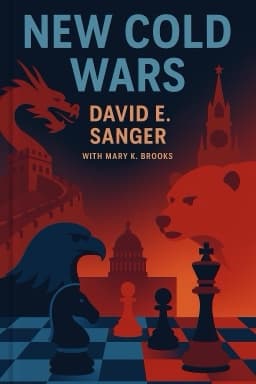
Inside the New Cold Wars: How China and Russia Are Redrawing the Global Map
Unveiling the complex dynamics of modern geopolitical rivalry and what it means for the world order.

The 21st century has ushered in a new era of geopolitical tension, often described as the 'New Cold Wars.' Unlike the bipolar standoff of the past, this modern contest involves multiple powers, notably China and Russia, challenging the established order led by the United States. The optimism that followed the Cold War's end, where many believed global peace and integration were inevitable, has given way to a more cautious and complex reality.
Russia’s resurgence under Vladimir Putin reflects a deep-rooted desire to reclaim influence lost after the Soviet Union’s collapse. This ambition, coupled with fears over NATO’s eastward expansion, has fueled aggressive policies including the annexation of Crimea and the full-scale invasion of Ukraine in 2022. Meanwhile, China’s economic ascent, marked by its entry into the World Trade Organization and rapid industrial growth, has not led to the political liberalization many anticipated. Instead, China has maintained strict authoritarian control while leveraging its economic power to assert a new global order.
These developments have forced the United States to recalibrate its foreign policy from hopeful engagement to strategic competition. Investments in technology, such as semiconductor manufacturing, and a renewed focus on alliances like NATO demonstrate a commitment to counterbalance these rising powers. However, this competition extends beyond traditional military domains into cyberspace, outer space, and emerging technologies like artificial intelligence.
The nuclear paradox remains a chilling backdrop, where modernization of arsenals and nuclear rhetoric complicate deterrence and raise the stakes of miscalculation. Alliances must adapt to these new realities, managing divergent interests while reinforcing collective security. Economic interdependence adds another layer of complexity, as global supply chains and technology markets intertwine rivals in a delicate dance of cooperation and competition.
Understanding the New Cold Wars requires acknowledging these overlapping dynamics and the intricate balance of power, economics, and ideology. It is a story of resilience, risk, and the ongoing quest for stability in a world where the old certainties no longer apply. As global citizens and policymakers navigate this landscape, the choices made today will shape the future for generations to come.
For a detailed exploration of these themes, see works like David E. Sanger’s 'New Cold Wars,' which provides a fast-paced account of America’s simultaneous confrontations with China and Russia, and the broader implications for global security and diplomacy. Additional insights can be found in analyses from the Wilson Center and reviews from leading academic presses. 4 1 3
Want to explore more insights from this book?
Read the full book summary